Podcast cover
swyx + Alessio · Technology

Latent Space: The AI Engineer Podcast

The podcast by and for AI Engineers! In 2025, over 10 million readers and listeners came to Latent Space to hear about news, papers and interviews in Software 3.0. We cover Foundation Models changing every domain in Code Generation, Multimodality, AI Agents, GPU Infra and more, directly from the founders, builders, and thinkers involved in pushing the cutting edge. Striving to give you both the definitive take on the Current Thing down to the first introduction to the tech you'll be using in the next 3 months! We break news and exclusive interviews from OpenAI, Anthropic, Gemini, Meta (Soumith Chintala), Sierra (Bret Taylor), tiny (George Hotz), Databricks/MosaicML (Jon Frankle), Modular (Chris Lattner), Answer.ai (Jeremy Howard), et al. Full show notes always on https://latent.space Sponsorship and business inquiries: [email protected] www.latent.space

Episodes

Episode cover

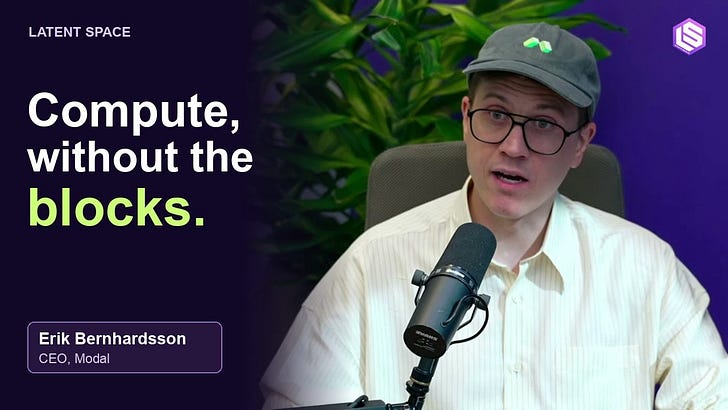
Why AI Compute Comes in Rectangles — Erik Bernhardsson, Modal CEO

22 Oct 2026
1h 25m
AI processed

Modal provides critical AI infrastructure, offering compute and storage platforms that enable developers to build and scale AI applications efficiently. The platform’s growth is anchored in its ability to manage complex GPU capacity, shifting from reliance on spot instances to securing multi-year commitments across twe...

Episode cover

You are the Team — Anekha Sokhal, Moshi

22 Oct 2026
26m
AI processed

Moshi founder Anekha Sokhal leverages her background in mathematics and energy derivatives trading to build AI-driven software that provides real-time, actionable insights for financial professionals. By processing vast quantities of structured and unstructured data—ranging from market time series to alternative source...

Episode cover

AI for the Fortune 2000: How Tenex Builds an AI-Native SDLC — Alex Lieberman & CJ Hess

21 Oct 2026
43m
AI processed

Tenex functions as an AI-native partner for large enterprises, transitioning organizations from simple application usage to fully integrated AI workflows. The company utilizes a performance-based compensation model, rewarding engineers for output measured in story points rather than hours, which has driven a roughly 2x...

Episode cover

The Programmable Data Center — Evan Conrad, SF Compute

20 Oct 2026
36m
AI processed

The compute market requires physical settlement to achieve true liquidity and standardization, addressing the inherent heterogeneity of hardware and the complexities of cluster management. By treating compute as a commodity with a forward curve, market participants can hedge risks and optimize utilization across divers...

Episode cover

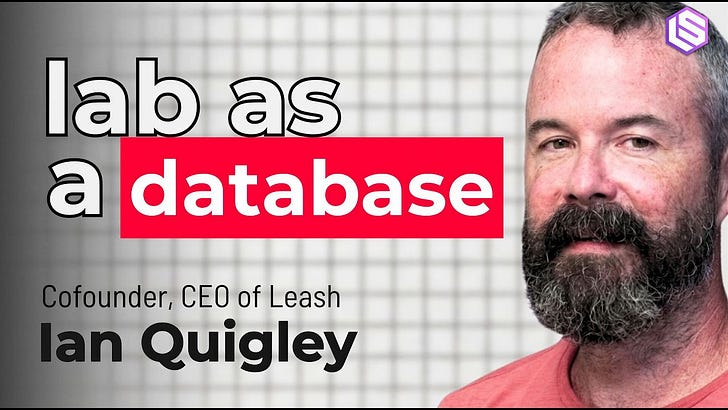
Lab-in-the-Loop at Compute Speed — Ian Quigley, Leash Bio

14 Oct 2026
1h 49m
AI processed

Small molecule drug discovery faces significant hurdles in data quality and scalability, prompting Leash Bio to leverage DNA Encoded Libraries (DELs) for high-throughput measurement. By attaching DNA barcodes to millions of small molecules, researchers can physically screen vast chemical libraries against hundreds of p...

Episode cover

Dyna-2: General Purpose Physical Agents with Hour-Long Autonomy — Jason Ma, Dyna Robotics

13 Oct 2026
1h 11m
AI processed

World-action models represent a paradigm shift in robotics by integrating future state prediction with physical action generation. Dyna-2 utilizes a diffusion transformer architecture trained on over one million hours of data to enable precise, dexterous motion in real-world environments. This approach emphasizes the i...

Episode cover

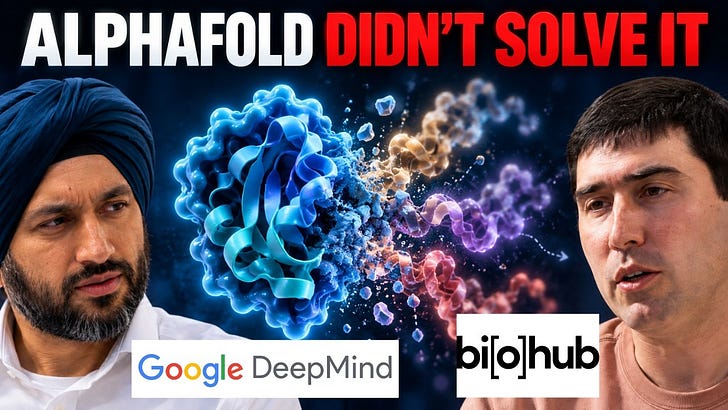
Why AlphaFold Didn't Solve Protein Folding — Pushmeet Kohli, Google DeepMind & Sal Candido, Biohub

10 Oct 2026
31m
AI processed

The "bitter lesson"—the principle that scalable methods eventually outperform handcrafted ones—requires a critical re-evaluation when applied to data-driven bioscience. While scaling compute and data is essential, success depends on identifying the right problem and prioritizing data quality over mere quantity. Modelin...

Episode cover

Synthesis Superintelligence: from Semiconductors to Superconductors — Periodic Labs’ Liam Fedus and Ekin Dogus Cubuk

08 Oct 2026
1h 24m
AI processed

Accelerating materials discovery requires moving beyond theoretical simulation to a "synthesis superintelligence" that integrates AI with high-throughput physical experimentation. Because materials science involves complex, noisy environments—where variables like furnace degradation or mechanical vibrations introduce u...

Episode cover

Academia is for Ambition — Alex Zhang, MIT

02 Oct 2026
1h 41m
AI processed

Recursive Language Models (RLMs) and advanced agent harness design represent a fundamental shift in AI development, moving beyond standard autoregressive decoders toward compositional systems that leverage code-based sub-agent calls. Alex Zhang, a researcher and contributor to GPU Mode, emphasizes that current AI progr...

Episode cover

Why Dwarkesh is Wrong about Computer Use + How OpenAI shipped its Jev competitor in 1 Week

30 Sep 2026
39m
AI processed

OpenAI’s latest developments in computer use agents and API infrastructure mark a shift toward highly efficient, autonomous software interaction. By providing agents with dedicated Linux virtual environments, these tools now execute complex, multi-step tasks—such as meal planning or YouTube management—faster than human...

Episode cover

Claude Code’s Next Era — Thariq Shihipar, Anthropic

29 Sep 2026
1h 32m
AI processed

Agentic coding has evolved from a niche experiment to a standard engineering workflow, driven by the rapid development of Claude Code and its associated harnesses. Effective interaction with these agents requires building a precise mental model of their capabilities, particularly in handling ambiguity and verifying com...

Episode cover

OpenRouter: from Seed to Stripe — with OpenRouter’s Alex Atallah & AMP’s Anjney Midha

25 Sep 2026
1h 20m
AI processed

OpenRouter functions as a critical infrastructure layer for the AI ecosystem, bridging the gap between model labs and developers by providing a neutral, scalable marketplace for LLM inference. By treating models as consumable SKUs, the platform enables developers to navigate the rapidly evolving landscape of frontier m...

Episode cover

Runway’s WorldPrompt and the Engineering of Real-Time Worlds

25 Sep 2026
1h 36m
AI processed

Runway co-founder Anastasis Germanidis details the evolution of generative video technology, tracing the company's path from early creative tools to the development of general-purpose world models. The discussion highlights the shift from simple content generation to simulating physics and human dynamics, emphasizing t...

Episode cover

🔬Bio-security is an AI Arms Race - Eric Nguyen (CEO, Radical Numerics)

23 Sep 2026
1h 31m
AI processed

Generative genomics leverages large language models trained on DNA to read and write the fundamental fabric of life, enabling breakthroughs in scientific discovery and human health. Unlike traditional bioinformatics, models like Omni utilize unsupervised pre-training to predict regulatory functions and identify causal ...

Episode cover

🔬 An Oscar, Two Asteroids, and the Algorithm in Your sklearn: John Platt on AI for Science

22 Sep 2026
2h 1m
AI processed

AI-driven scientific discovery centers on the AERA framework, which transforms complex scientific problems into "scorable tasks" optimized by AI agents. By leveraging large language models like Gemini, researchers can iteratively generate and refine code to maximize specific scientific objectives, effectively offloadin...

Episode cover

Jev: System One models for Prod, not God — with Diogo Almeida, CEO, TypeSafe AI

21 Sep 2026
2h 20m
AI processed

Jev, a newly launched "System One" model, represents a shift toward machine-native AI designed for programmatic consumption rather than human-facing chat. By prioritizing intelligence-per-dollar and reliability, Jev functions as a foundational infrastructure layer for software developers, moving away from the mode-drop...

Episode cover

Underwriting Superintelligence: Backing Agents you can Sue — Rune Kvist, AIUC

16 Sep 2026
1h 26m
AI processed

Risk, rather than technical capability, remains the primary bottleneck for widespread AI adoption in critical sectors like banking and healthcare. AIUC addresses this by building "confidence infrastructure" through a standardized, quarterly-updated certification framework for AI agents. This process combines rigorous t...

Episode cover

Humanity’s Last Invention — Richard Socher of Recursive

14 Sep 2026
1h 32m
AI processed

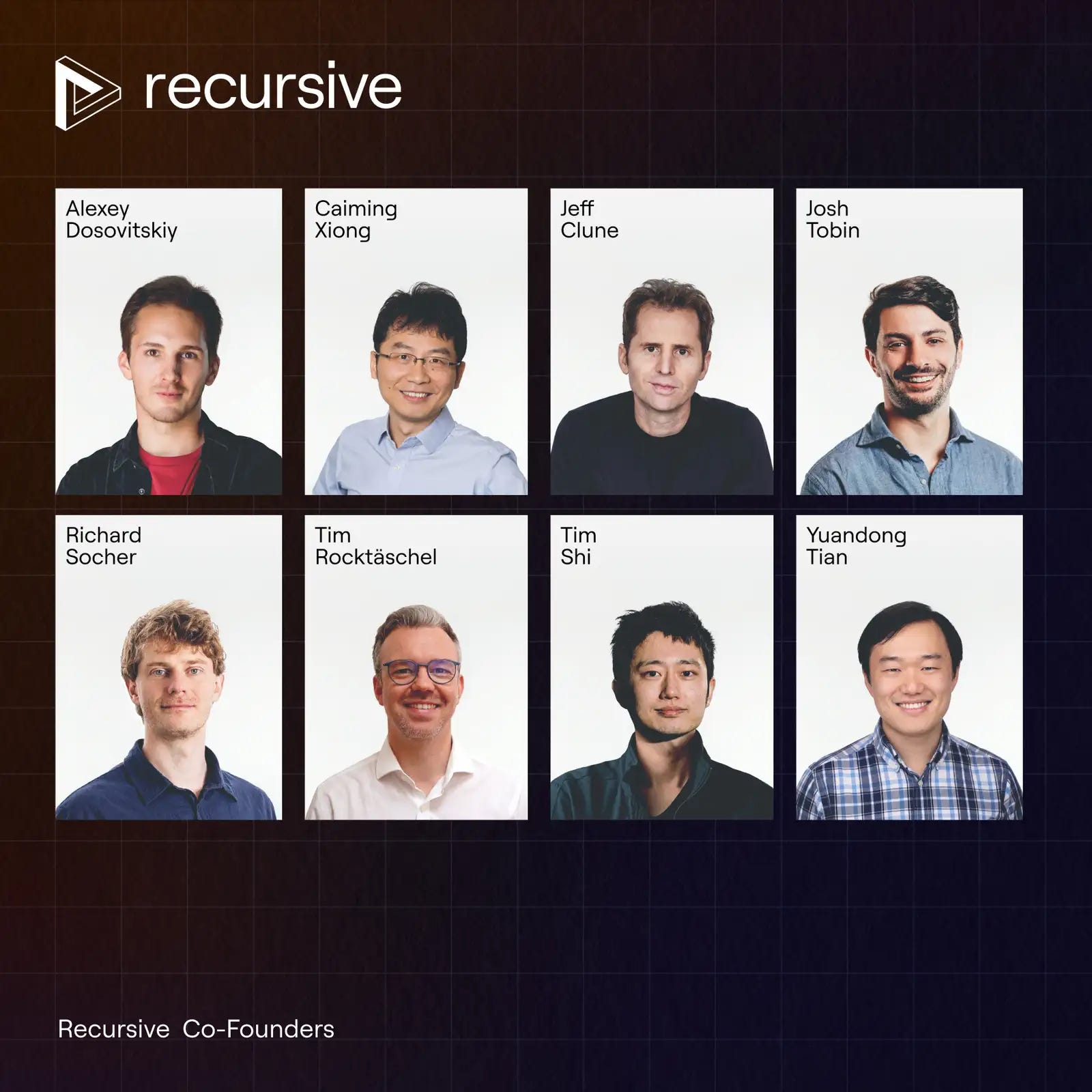
The "Eureka Machine" represents a vision for superintelligence designed to automate scientific and technological invention across fields like physics, chemistry, and biology. Rather than fearing a rapid "hard takeoff," the development of such systems faces significant physical and economic constraints, necessitating a ...

Episode cover

🔬“We have foundation models for language, not for physics” — Anima Anandkumar, Bren Professor of Computing

26 Aug 2026
1h 23m
AI processed

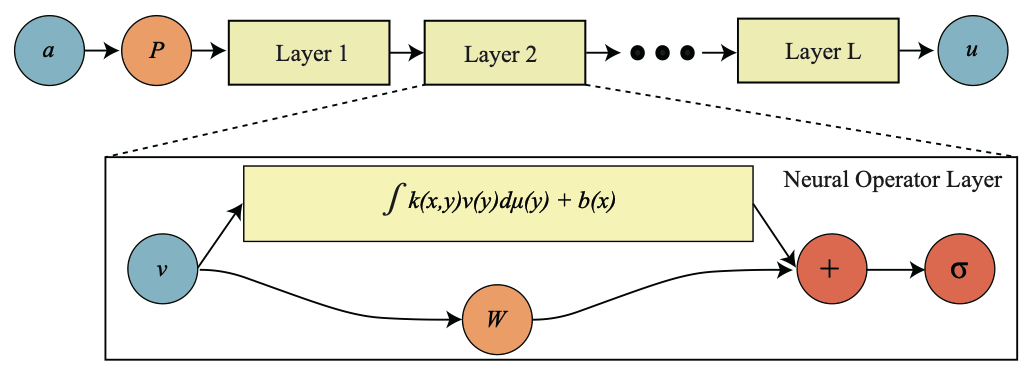
Integrating AI with physical world modeling through neural operators enables high-fidelity simulations that outperform traditional numerical methods. Neural operators generalize neural networks by learning mappings between function spaces, allowing for multi-scale resolution and efficient modeling of complex physical p...

Episode cover

Simulation: the new Scaling Law — Joon Sung Park, Simile AI

21 Aug 2026
1h 9m
AI processed

Simulation technology serves as a powerful tool for human decision-making by modeling complex social behaviors rather than merely predicting future outcomes. Joon Sung Park, co-founder of Simile, notes that current frontier models often lack the deep, behavioral "dark knowledge" of humanity, which requires specialized ...

Page 1

Follow this podcast in Podwise

Sign in to get AI summaries, transcripts and mind maps for any episode, including new ones.

Open in Podwise