

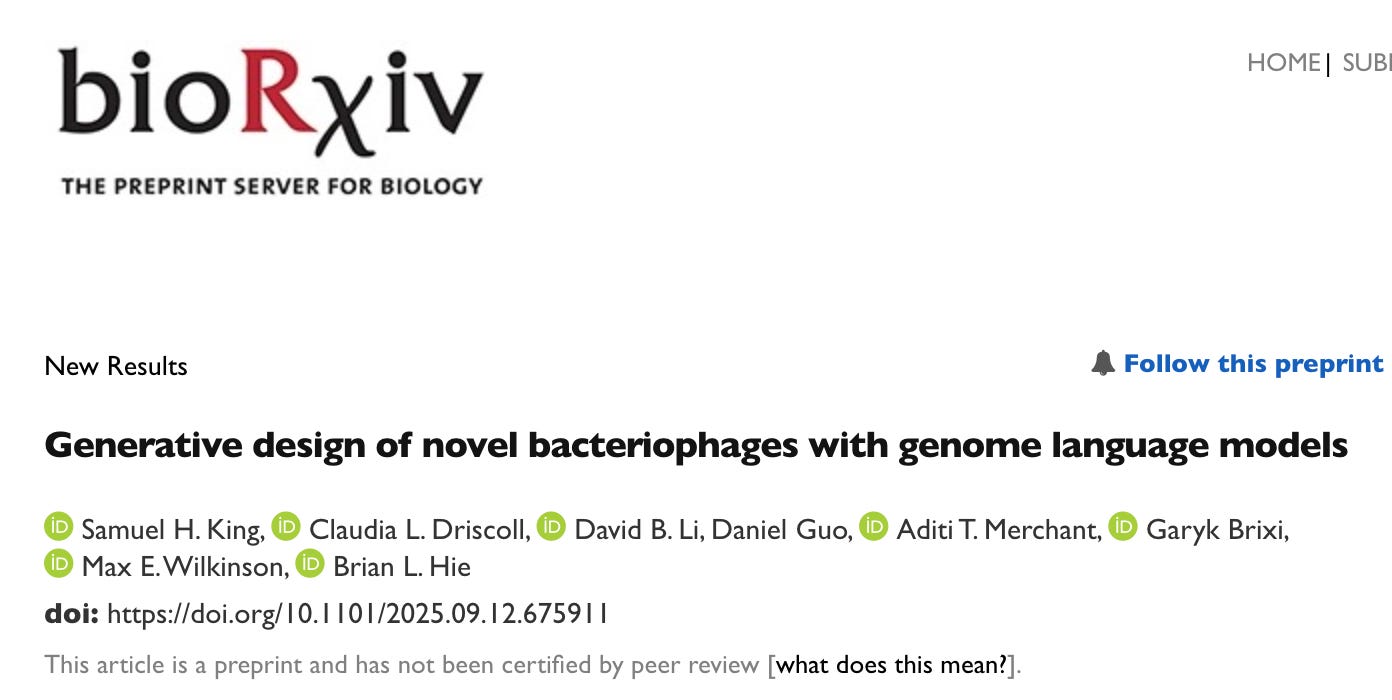
🔬Bio-security is an AI Arms Race - Eric Nguyen (CEO, Radical Numerics)

Latent Space: The AI Engineer Podcast
Generative genomics leverages large language models trained on DNA to read and write the fundamental fabric of life, enabling breakthroughs in scientific discovery and human health. Unlike traditional bioinformatics, models like Omni utilize unsupervised pre-training to predict regulatory functions and identify causal variants within complex non-coding regions. A dual mandate approach ensures that these powerful design capabilities are paired with defensive tools, including pathogen detection and sequence attribution, to mitigate biosecurity risks. By applying techniques like chain of thought reasoning, these models can self-optimize sequences to achieve higher fitness scores. Unifying biological modalities—DNA, RNA, and proteins—into a single foundation model provides a superior, context-aware framework for biological research, moving beyond the limitations of specialized, domain-specific tools to address the vast, combinatorial complexity of biological systems.
Part 1: Foundations, Generative Capabilities
Part 2: Architecture, Alignment, Disease Prediction
Part 3: Applications, Scaling, Interpretability
Part 4: Biosecurity, Future Outlook
Sign in to continue reading, translating and more.
Open full episode in Podwise