

86. The Other Side of The Bed: Surviving The ICU & Beyond
12 Oct 2026
1h 40m
Critical Care Time is the podcast for everyone who cares for the critically Ill. Whether you work in an ICU, a Med-Surg unit, an ED, a PACU or the back of an ambulance - Dr. Cyrus Askin & Dr. Nick Mark provide practical insights and useful tips to enhance your skillset. They are triple board-certified intensivists who love patient care and teaching. Journey with them through deep dives into physiology and practical pearls, leaving no stone unturned in the world of critical care medicine. Through their own insights, expert interviews and targeted reviews of the literature, Nick and Cyrus provide practical, relevant critical care pearls. If you bill for critical care time, you must make time for Critical Care Time! Hosted on Acast. See acast.com/privacy for more information.
Inotropes serve as essential tools for modulating cardiac contractility in critically ill patients, functioning through distinct adrenergic and non-adrenergic pathways. These agents—including dobutamine, epinephrine, milrinone, and calcium—differ significantly in their effects on chronotropy, systemic vascular resistan...
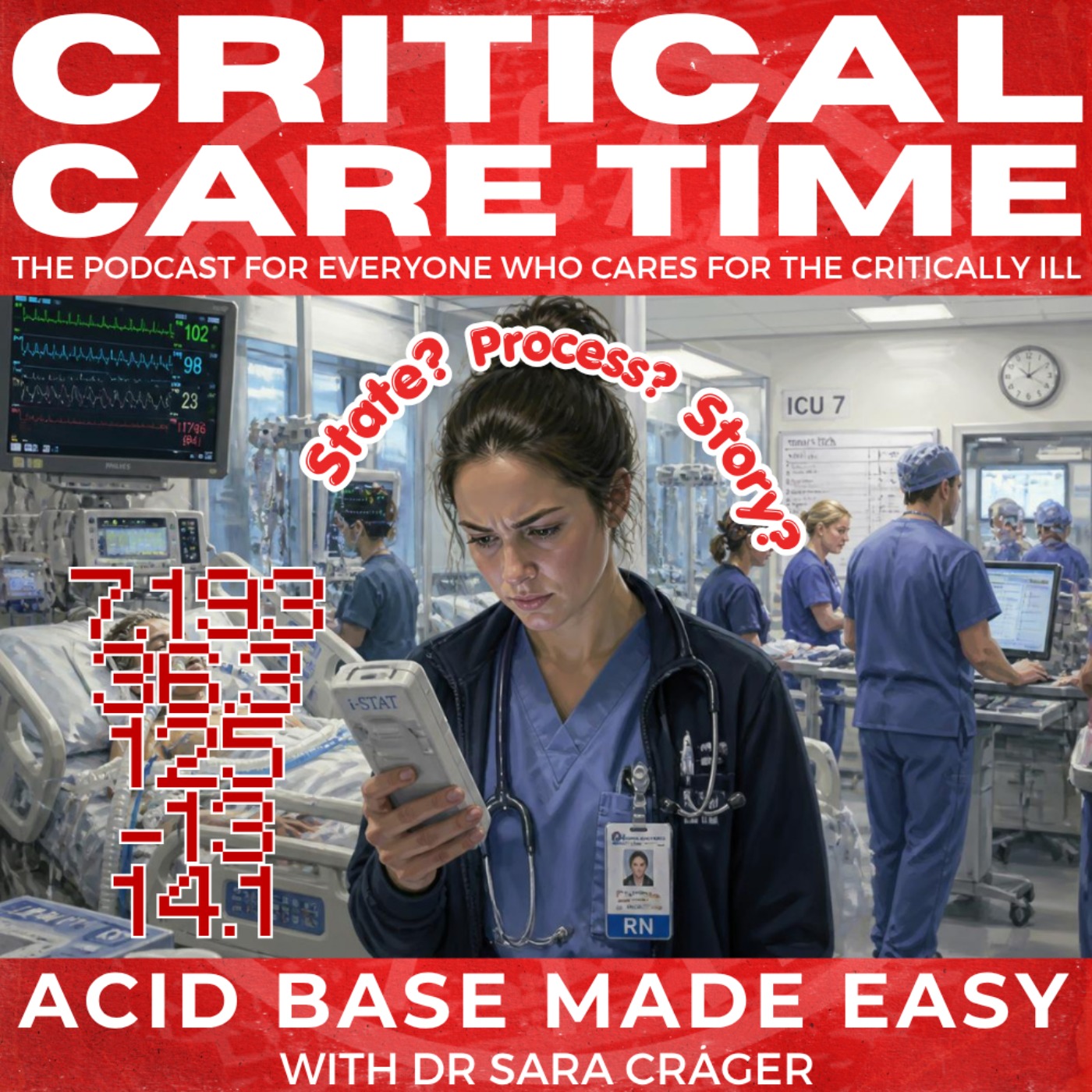
Acid-base interpretation in critical care requires moving beyond outdated Henderson-Hasselbalch equations toward a functional, bedside-oriented mental model. Dr. Sara Crager introduces the "State, Process, Story" framework, which prioritizes clinical utility over complex mathematics. By focusing on the strong ion diffe...
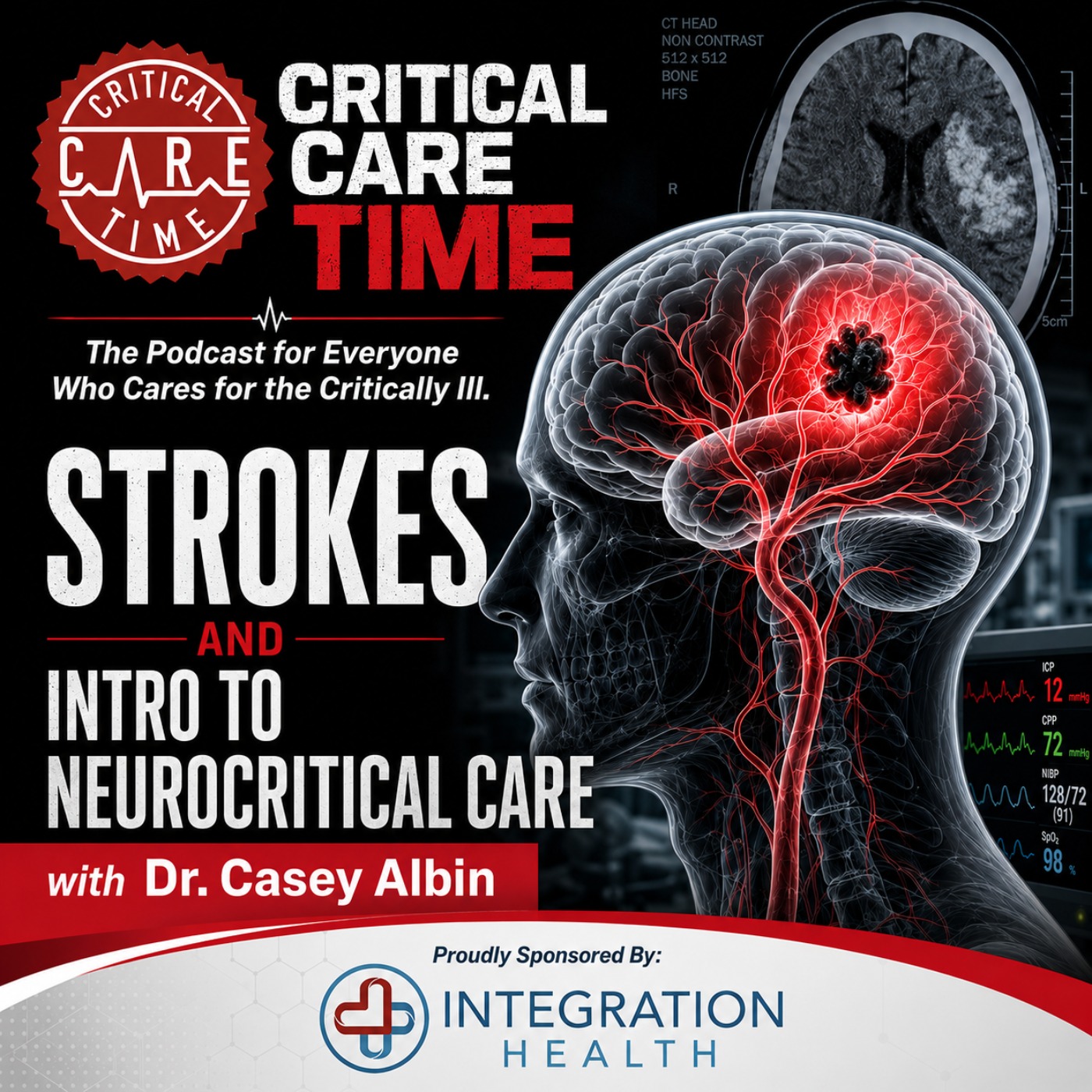
Neurocritical care management centers on maintaining intracranial pressure (ICP) balance, as described by the Monro-Kellie doctrine, to prevent herniation and secondary brain injury. Guest Dr. Casey Albin, a neurointensivist, highlights that optimal care involves adjusting head position, ensuring venous return, and uti...


Managing the physiologically difficult airway requires prioritizing patient stability over the convenience of standard rapid sequence intubation. These airways are defined by cardiopulmonary complexities—such as severe hypoxemia, hypotension, or metabolic acidosis—that render patients intolerant to the apnea induced by...
The physiologically difficult airway presents significant risks in critical care, primarily due to dynamic changes in patient stability during induction and transition to positive pressure ventilation. Key physiologic derangements—including hypotension from vasodilation, worsening acidosis and hypoxemia during apnea, i...

Arterial lines provide essential real-time, beat-to-beat blood pressure monitoring and facilitate frequent blood gas sampling in critically ill patients. While radial access remains the standard first-line approach due to its safety and ease of compression, clinicians should utilize ultrasound guidance to improve succe...

Ventricular tachycardia (VT) management in critical care requires distinguishing between patients with structural heart disease and those where the heart is a secondary bystander. In structural cases, such as ischemic cardiomyopathy, re-entry circuits around infarct scars often trigger malignant arrhythmias, necessitat...


Lung transplantation presents unique clinical challenges due to the organ's constant exposure to environmental pathogens and its high immunogenicity, resulting in a median survival of approximately seven years. Managing these patients requires a multidisciplinary approach, particularly when critical illness necessitate...

This podcast episode centers on diabetic ketoacidosis (DKA), its causes, and proper management in clinical settings. The hosts emphasize that DKA management requires identifying and addressing the underlying cause, not just treating symptoms. They introduce a mnemonic, the "five I's" (infection, ischemia, inflammation,...
Toxicology management in the intensive care unit requires rapid pattern recognition and precise physical examination to guide life-saving interventions. Clinical diagnosis centers on identifying classic toxidromes, such as opioid-induced respiratory depression, serotonin syndrome, lithium toxicity, and toxic alcohol in...


This podcast explores the critical role and often-overlooked nature of the right ventricle (RV) in critical care. Dr. Matt Siuba, a medical intensivist and pulmonary vascular disease expert, joins the hosts to discuss why the RV is "the people's ventricle," drawing parallels to marginalized figures in history due to it...
Follow this podcast in Podwise
Sign in to get AI summaries, transcripts and mind maps for any episode, including new ones.