

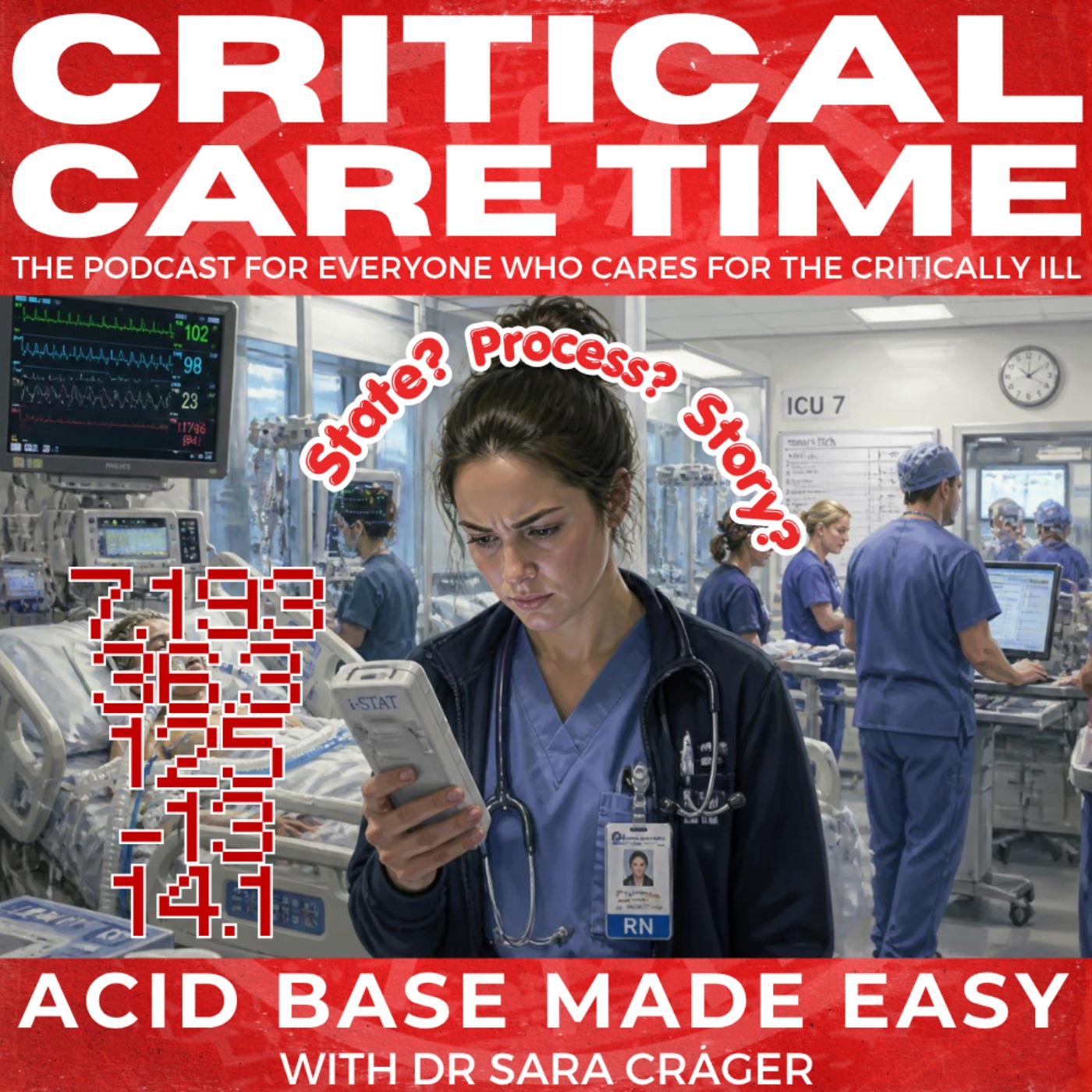
Acid-base interpretation in critical care requires moving beyond outdated Henderson-Hasselbalch equations toward a functional, bedside-oriented mental model. Dr. Sara Crager introduces the "State, Process, Story" framework, which prioritizes clinical utility over complex mathematics. By focusing on the strong ion difference—the gap between sodium and chloride—clinicians can identify metabolic disorders without relying on cumbersome ratios like Delta-Delta. This approach emphasizes that hyperchloremia and hypochloremia serve as reliable markers for non-gap acidosis and metabolic alkalosis, respectively. Integrating these findings with the patient’s clinical context allows for rapid, accurate diagnosis of complex acid-base derangements. Rather than relying on rigid mnemonics, this method encourages understanding physiological mechanisms, such as renal chloride-bicarbonate exchangers, to guide resuscitation strategies, manage mechanical ventilation, and interpret blood gas data effectively in high-acuity settings.
Part 1: Framework, Physiology
Part 2: Analysis, Differentials
Part 3: Practical Application, Cases
Sign in to continue reading, translating and more.
Open full episode in Podwise