

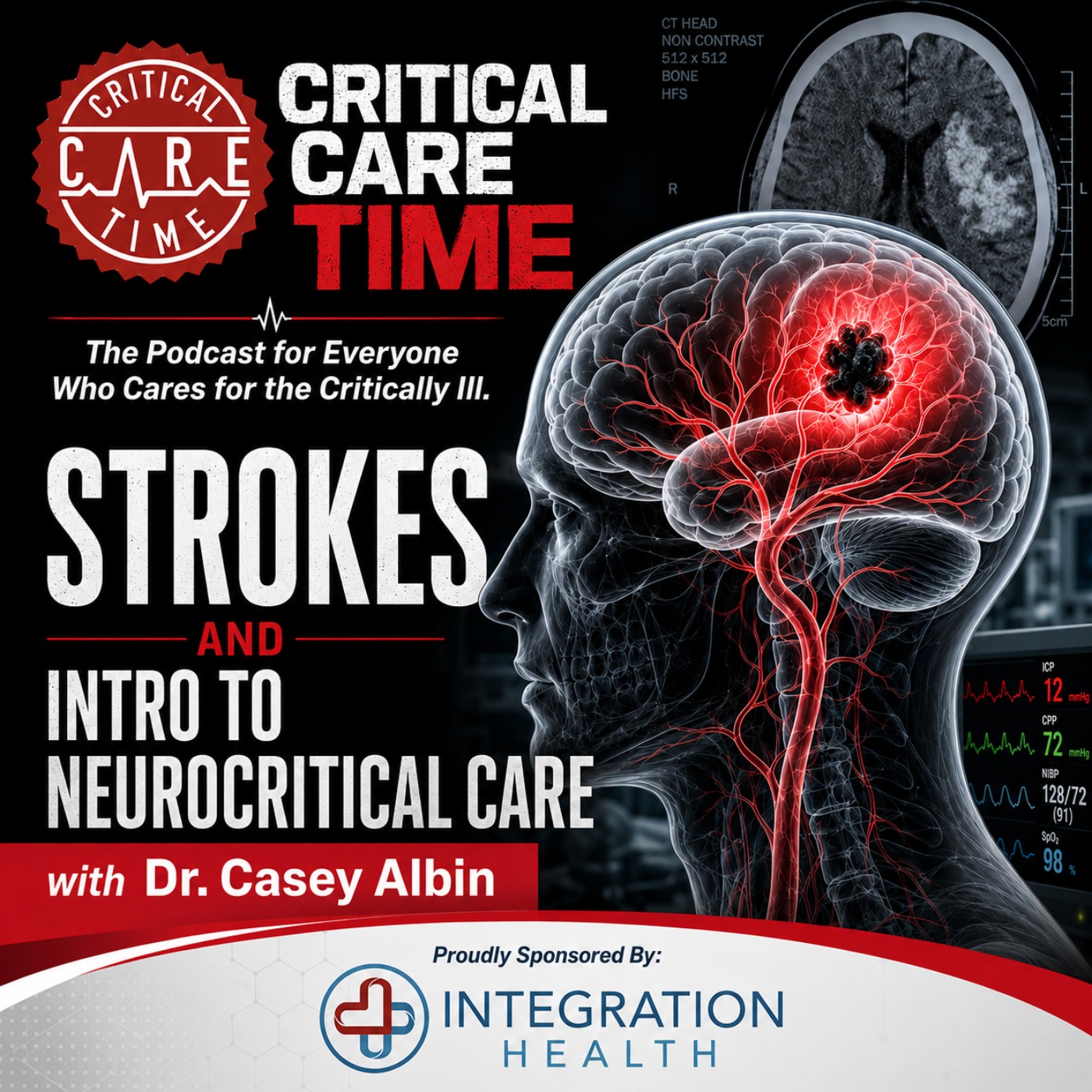

Neurocritical care management centers on maintaining intracranial pressure (ICP) balance, as described by the Monro-Kellie doctrine, to prevent herniation and secondary brain injury. Guest Dr. Casey Albin, a neurointensivist, highlights that optimal care involves adjusting head position, ensuring venous return, and utilizing hyperosmolar therapies like 23% saline or mannitol when clinically indicated. Cerebral perfusion pressure (CPP) remains a critical target, often requiring a mean arterial pressure (MAP) of 75-80 mmHg to ensure adequate oxygenation. In ischemic stroke, the focus has shifted from a strict time-based window to a tissue-based clock, prioritizing thrombectomy for large vessel occlusions. Hemorrhagic stroke management requires aggressive blood pressure control and timely anticoagulation reversal using four-factor prothrombin complex concentrate. Subarachnoid hemorrhage demands vigilance for delayed cerebral ischemia, necessitating nimodipine administration and careful monitoring for vasospasm to mitigate long-term neurological deficits.
Part 1: Career Pathways, Foundations
Part 2: Monitoring, Physiology, Medical Management
Part 3: Stroke, Hemorrhage Interventions
Part 4: Recovery, Long-term Care
Sign in to continue reading, translating and more.
Open full episode in Podwise