There Is No Such Thing as Founder Succession
Shopify's Tobi Lütke on why Jensen Huang can't be replaced, why Tim Cook only extended the runway, and why the programmer job is already over.
Guide8 min read
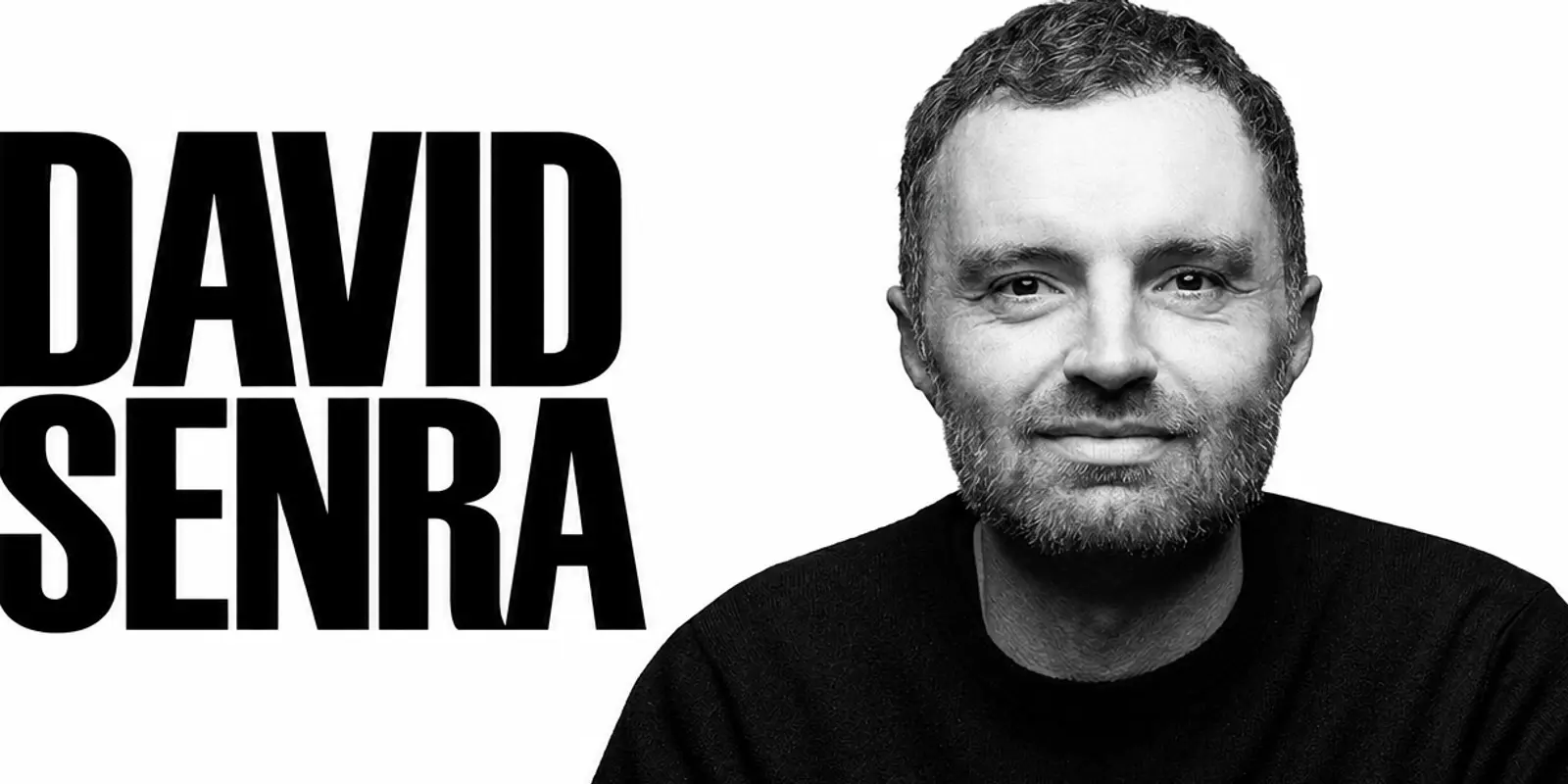
NVIDIA ends today and is replaced with a thing cosplaying NVIDIA. That is Tobi Lütke quoting his own post about Jensen Huang, four days after an affair allegation metastasized into a Chinese-spy story with TikTok sequels. The burden of proof, he says, should be enormously higher for removing the man who turned rocks that think into a $4 trillion company. Then, for an hour, the Shopify founder argues the bigger claim behind the hot take: there is no succession for a founder, and there is no programmer job anymore either.
A $4 trillion company, and three hospitals
Lütke's evidence for Jensen starts with his own wallet. As a teenager in Germany he sold things to classmates, ran a paper route, came up short for a computer upgrade — and donated blood at three different hospitals in a row, because they paid and did not compare notes, until he could buy a Riva TNT, Jensen's 3D accelerator. Accelerating linear algebra made the video games of his youth; a decade of CUDA that investors called pointless — nobody knew what it was for — became the substrate of AlexNet and everything after. His summary: takes sand and rock, makes it think, answers the entrepreneurial questions you secretly have about starting your own company.
The operating facts he cites are specific. Jensen reviews every large GPU order personally. He made sure startups and small buyers got allocation they did not have to get. He championed open-source AI — which, Lütke notes, gives plenty of people a motive to want him gone, since many do not want open-source AI to take off. And then the part he delivers as accusation, flagged as his own read: affair, Chinese spy, another affair, another affair — surgical, choreographed, exactly how you write a takedown in a book. He admits he may look dumb in retrospect and has no inside information. My read: treat the op theory as a founder defending his species, and keep the checkable parts — the orders, the allocation, the open-source bets — as the actual argument.
Tim Cook kept the runway. He didn't lay a new one.
The thesis, sharpened: there is no succession plan that preserves a founder company, only a transition into a custodially run company. Tim Cook, Lütke says, is presumably the best in history at taking over from a founder and keeping the direction — extended the runway, one or two new products, enormous market-cap growth he deserves credit for. But allocate the market cap to the products, and the products were all developed under Steve. Maybe, if lucky, the replacement is valuable, even more valuable — but the betting odds are terrible, and the company under the founder ends the day the founder leaves.
The supporting exhibit is Meta. A year and a half ago everyone mocked the hiring spree of researchers at absurd prices; now Meta is a full-perimeter frontier AI lab, and no non-founder company with Meta's resources made that call. Only founders reinvent their companies, because only founders operate on intrinsic flame rather than externally induced motivation. When custodians take over, the why becomes outside-in. My read: this is the load-bearing distinction of the episode — intrinsic versus induced motivation — and everything about AI tooling later is really about which kind your company runs on.
The 95% you don't own
Lütke owns five or six percent of Shopify. Ninety-five percent belongs to the public, employees, early risk-takers. His point is not humility but mechanics: money enters the world at the moment of product creation, when potentiality becomes something people trade. Jensen's teams take potentiality and make trillions of dollars of new value exist that did not exist before.
Hence the Bezos anecdote, offered explicitly as a made-up illustration: Amazon worth $2 trillion, Bezos owning $200 billion, meaning he helped create $1.8 trillion for others — so why rank the $200 billion instead of the $1.8 trillion? Redistribution matters, Lütke says, but it is secondary; you must make something before deciding who needs help. Push the logic and the West's drift looks like the Middle Ages: no growth, no steam power, the only kinetic energy from birth and beasts of burden, so all politics collapses into taking from others. Growth is the alternative to conquest, and growth is what founders do.
The dark edge: founders increasingly face safety risk, not just derision. Assassinations of CEOs, polls in which up to 60% on one side of the spectrum say violence against CEOs can be justified — his numbers, delivered with disgust. Founders are used to naysayers; the school of hard knocks is priced in. If showing up becomes physically dangerous, people opt out, and the opt-out is silent.
The programmer job is over
DHH's Rails World talk put a date on it — 2026 is when it ended — and Lütke agrees with the substance. Web 2.0 was figuring out the browser as an application medium; Basecamp in 2004, Rails, open-source gifts turned into products people could cancel anytime. That era's job — typing characters into a terminal to program computers — no longer exists. Everyone who did it has started a new, better job: makers talking to computers in wishes, thinking about the system they want instead of the next good-enough step.
His diagnostic for teams stuck in the old world: insufficiently ambitious prompting. He audits people's prompt histories, clusters them, and finds the same failure — they investigated, which is good, but never let the machine question the problem itself. The work that remains has an ugly placeholder name: verification engineering. Acceptance tests. Proving the system is correct. Formal verification — Lean-style proof, state machines, TLA models — went in his lifetime from an academic curiosity to, in his words, by far the most important field in engineering, because agents now generate more code than humans can review. His practical recipe: ask your AI for every implicit state machine in the codebase, make them explicit, specify them, then check with tools like DeepSec. You will find a thousand bugs in any codebase ever pointed at, he claims. Production code will be rebuilt in safer languages, and software becomes nearly bug-free.
Learn the instrument
The metaphor he lands on is musical. AI is an instrument: anyone can pluck one string, but Hendrix-level play means understanding the tool deeply while its base shifts under you. Do not use it as a task accelerator; bring it problems and stay open to solutions you would never conceive — Move 37, but for your codebase. The gap between those who get this and those who do not, he says, is the largest productivity gap in any industry ever: modern factory versus medieval blacksmith, so many zeros that time stops mattering and only spend does.
He reports from the frontier as evidence. Shopify's internal source system Delta — thousands of engineers committing — needed a rewrite because pull-request rates ran 10 to 100 times any previous point in company history. A multi-year rewrite became a weekend project worth $2,000 of tokens, plus a Rust groundwork that deletes millions of lines. Internal tools at Shopify are high-status work, DHH begs to buy them, and every weekend this year Lütke worked straight through because, as he puts it, he is made for this moment. The rule for everyone else: be too good to ignore, join a self-sustaining group at your level, and let the machine do the typing while you do the wanting.
So the episode leaves two linked verdicts. No custodian preserves a founder's company; no typist preserves a programmer's job. The remaining work is wanting precisely, proving relentlessly — and deciding, while the flame is still yours, what deserves to exist. What would you build this weekend if the typing cost two thousand dollars?
More podcast deep dives from Podwise.