

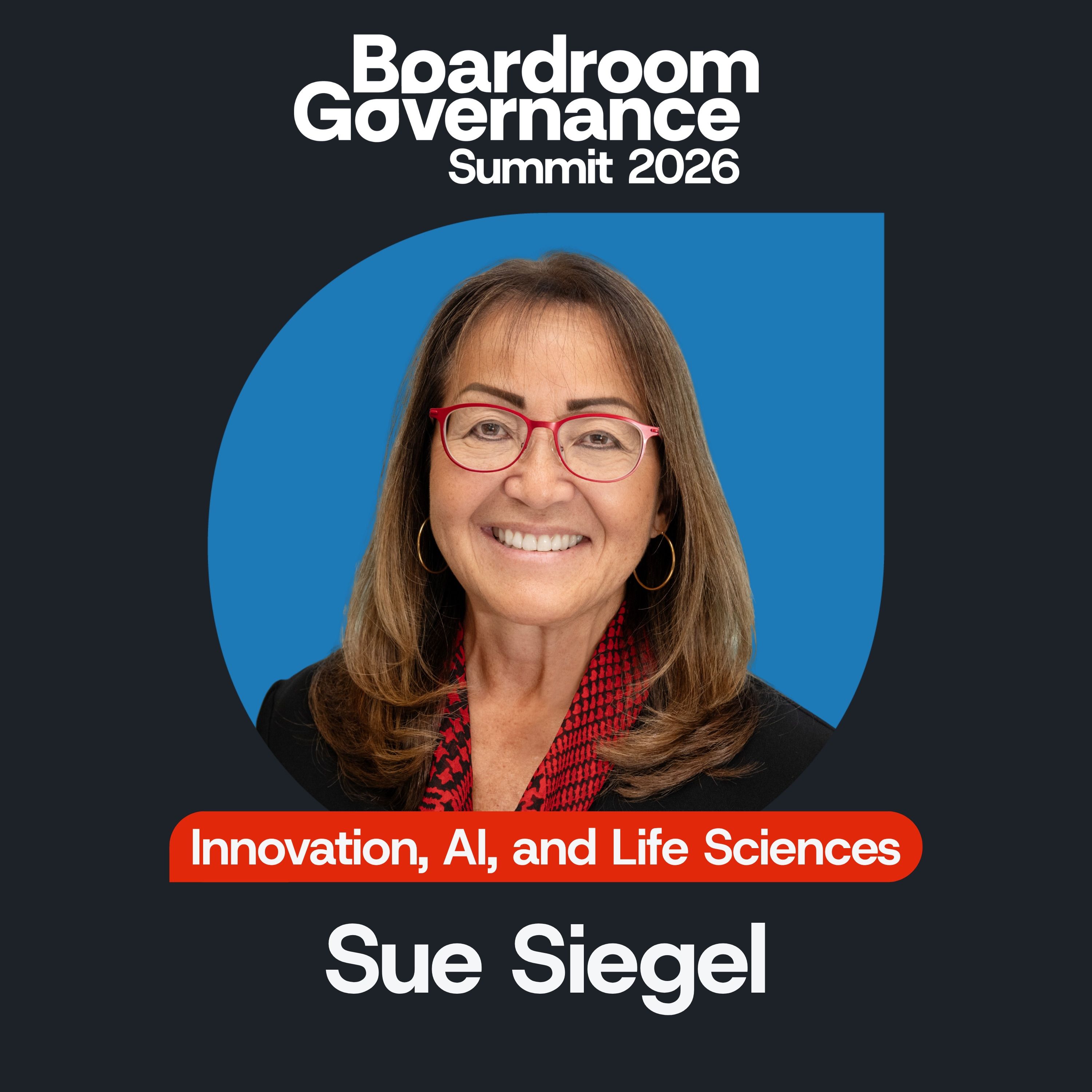
Sue Siegel: Innovation, AI, and the Future of Life Sciences
23 Oct 2026
29m
Boardroom Governance with Evan Epstein features in-depth conversations with leading voices in corporate governance, including founders, board members, executives, investors, scholars, lawyers, and other trusted advisors. Through long-form interviews, the podcast explores the people, decisions, trends, risks, and ideas shaping today’s boardrooms. Each conversation combines practical governance insights with personal experiences, leadership lessons, and the career journeys of some of the most accomplished minds in business.

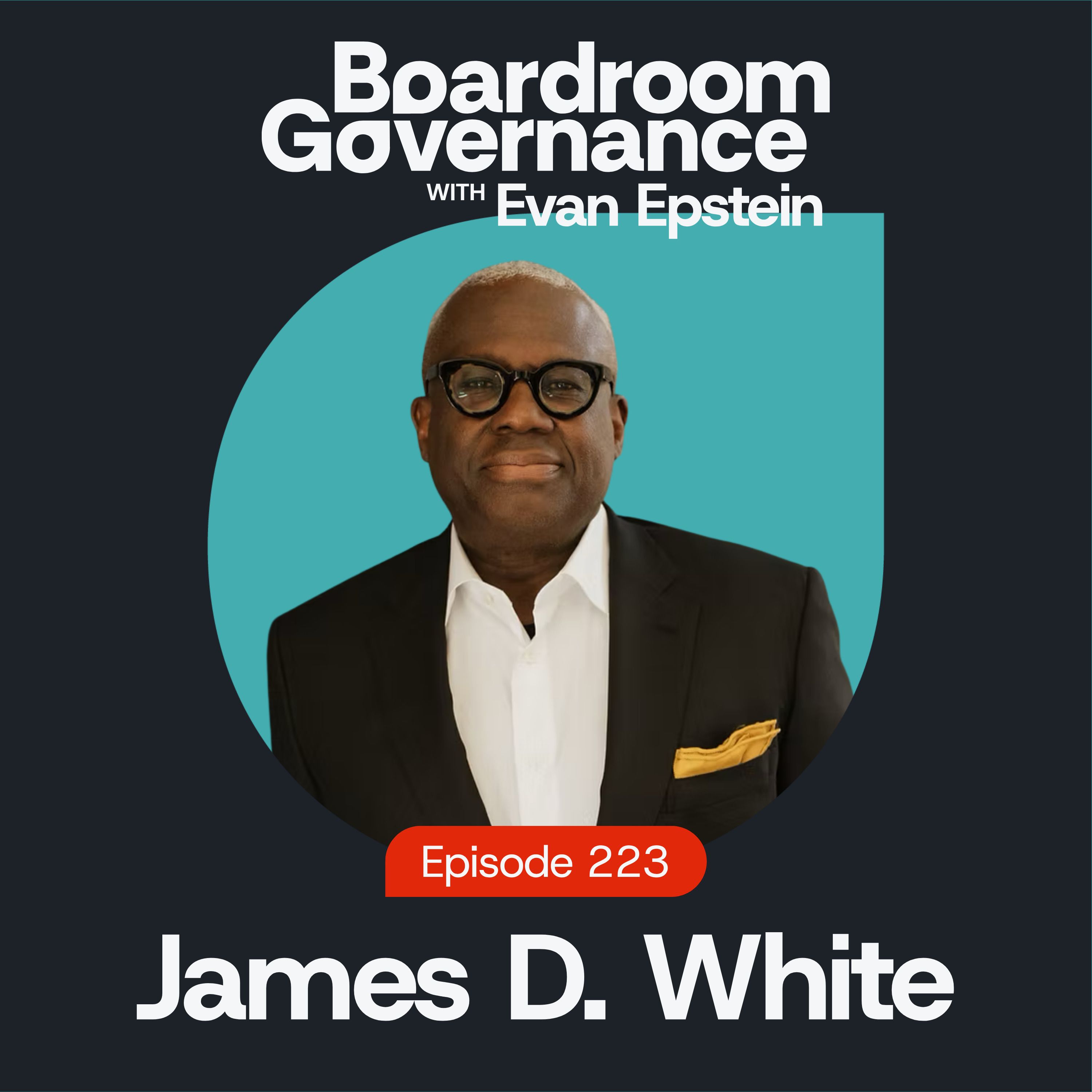


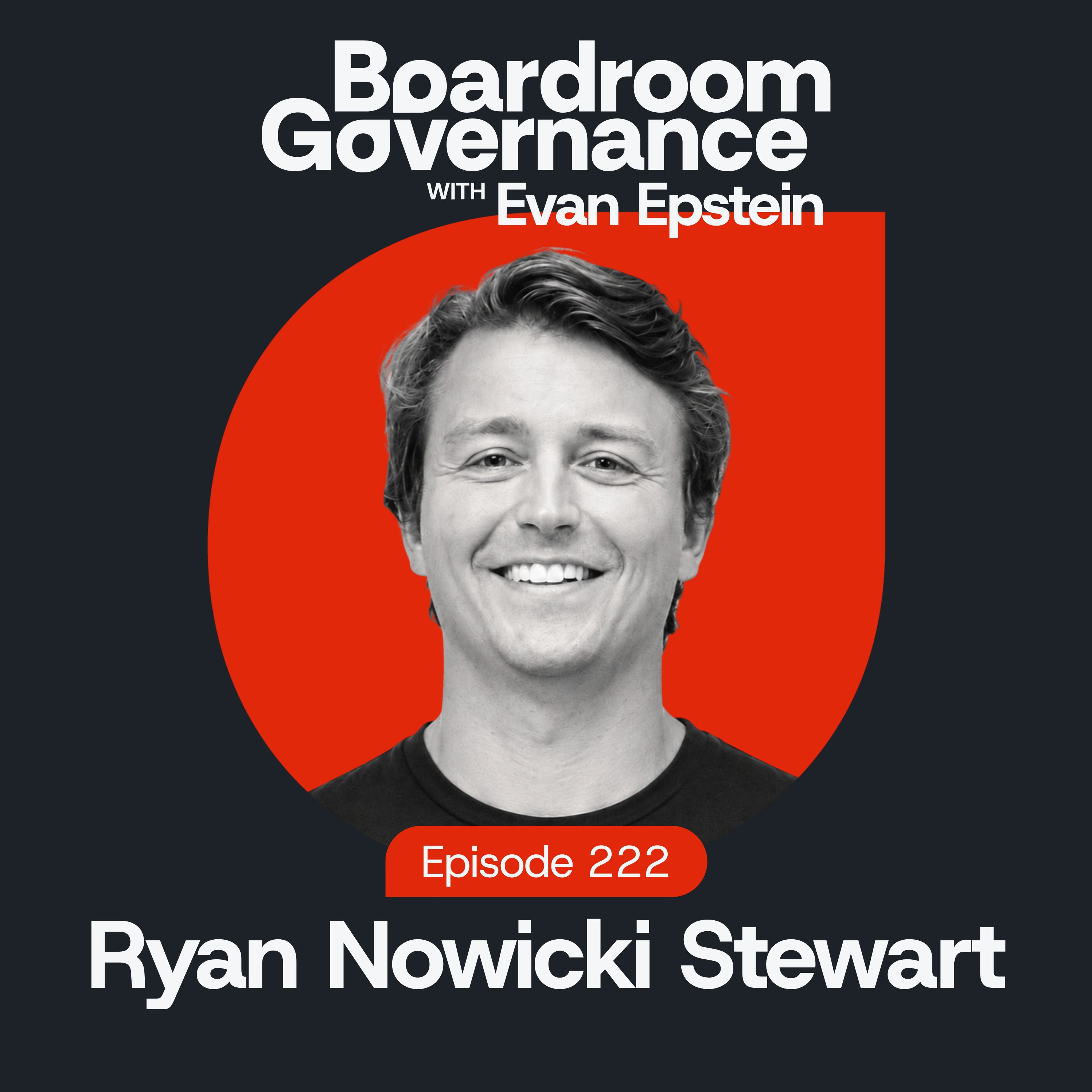
Corporate governance requires a technological overhaul as institutional investors struggle to manage the increasing complexity of proxy voting and shareholder engagement. Pennant AI addresses this by building an AI-native "world model" for governance, designed to consolidate fragmented workflows and replace reliance on...

Corporate governance increasingly involves companies acting as private rule-makers, shaping societal norms and market standards where governments remain inactive. Stavros Gadinis, Professor of Law at UC Berkeley, introduces a three-part framework for "corporate ordering"—rulemaking, implementation, and monitoring—to he...
Effective board oversight of artificial intelligence requires moving beyond simple productivity metrics to address fundamental shifts in data architecture, cybersecurity, and organizational design. Directors must prioritize understanding the company's data strategy, as AI models rely heavily on the integrity of both st...

CEO succession functions as a critical, ongoing board responsibility that requires proactive management rather than reactive crisis planning. Boards must treat leadership transitions as a continuous process, evaluating internal talent through P&L exposure and development while simultaneously mapping external candidates...
The integration of AI into corporate governance significantly enhances board effectiveness by providing nuanced industry insights and challenging strategic assumptions. Raffaela Rein, founder of BoardLens, highlights how purpose-built AI tools allow directors to move beyond simple reporting tasks to drive more informed...

AI is transforming corporate governance, shifting board portals from simple document repositories to intelligent systems that enhance decision-making and institutional memory. While 92% of directors experiment with AI, most operate without formal policies, creating significant security and confidentiality risks. Effect...
Corporate leadership and board governance require a nuanced understanding of risk, resilience, and technological integration. Shannon Nash, COO and CFO of Vibrant Planet, highlights the evolution of board responsibilities, noting that cybersecurity and AI are no longer peripheral issues but central to operational strat...

Corporate governance structures diverge significantly between Europe and the United States, particularly regarding the role of reference shareholders, family-controlled entities, and state-owned enterprises. While U.S. markets often prioritize shareholder value, European governance frameworks increasingly emphasize sus...

Corporate governance faces unprecedented complexity as AI integration, geopolitical instability, and shifting labor markets redefine board responsibilities. While AI drives significant infrastructure growth, the industry struggles with a public perception crisis regarding job displacement that often ignores long-term e...

Effective board governance requires shifting from a purely fiduciary mindset to one centered on high-performing teamwork and long-term value creation. Experienced directors Mayree Clark and Linda Riefler argue that boards must prioritize psychological safety and candid communication to navigate complex environments, in...

AI integration demands rigorous board-level oversight to mitigate fiduciary risks, particularly under the Caremark doctrine. As AI becomes mission-critical, directors must move beyond episodic reviews to establish continuous monitoring systems that address legal, regulatory, and operational vulnerabilities. Effective g...

The sports and gaming industry is undergoing a structural transformation as institutional capital, particularly private equity, increasingly integrates into professional leagues. Terry Johnson, partner at WilmerHale and co-chair of its Sports and Gaming Practice, highlights how this influx of capital demands greater op...

Private equity governance requires a distinct approach compared to public or venture-backed models, focusing heavily on strategic execution rather than administrative process. Boards in this sector often function as hands-on partners, prioritizing the alignment of management teams with specific value-creation playbooks...

Corporate governance requires a long-term stewardship mindset, balancing the immediate pressures of innovation with the necessity of rigorous oversight. Board effectiveness hinges on composition, where diverse expertise and the willingness to address difficult succession issues—both for CEOs and fellow directors—are pa...

The current Silicon Valley boom, fueled by an AI Supercycle, is fundamentally reshaping startup formation, venture capital sourcing, and corporate strategy. Unlike previous market cycles, AI integration is accelerating productivity and enabling horizontal expansion for software companies, though it simultaneously creat...
Follow this podcast in Podwise
Sign in to get AI summaries, transcripts and mind maps for any episode, including new ones.