Podcast cover
3Blue1Brown · Education

3Blue1Brown

My name is Grant Sanderson. Videos here cover a variety of topics in math, or adjacent fields like physics and CS, all with an emphasis on visualizing the core ideas. The goal is to use animation to help elucidate and motivate otherwise tricky topics, and for difficult problems to be made simple with changes in perspective. For more information, other projects, FAQs, and inquiries see the website: https://www.3blue1brown.com

Episodes

Episode cover

The last IMO problem AI could not solve

18 Sep 2026
51m
AI processed

The 2025 International Math Olympiad’s sixth problem serves as a critical benchmark for the limits of artificial intelligence in creative, rigorous mathematical reasoning. While AI models have achieved rapid success in competitive math, they struggle with the patience and aesthetic appreciation required to solve proble...

Episode cover

But what is cross-entropy? | Compression is Intelligence Part 2

16 Jul 2026
33m
AI processed

Cross-entropy serves as a fundamental link between data compression and the training of large language models. By measuring the efficiency of a code optimized for one context when applied to another, this metric quantifies the divergence between predicted and actual data distributions. In machine learning, minimizing c...

Episode cover

Reinventing Entropy | Compression is Intelligence Part 1

07 Jun 2026
32m
AI processed

The fundamental limit of data compression stems from information theory, where the objective of minimizing bit usage is mathematically equivalent to predicting the next token in a sequence. Claude Shannon’s Noiseless Coding Theorem establishes that entropy—the average information content per symbol—serves as the theore...

Episode cover

How (and why) to take a logarithm of an image

22 Mar 2026
44m
AI processed

The podcast explores M.C. Escher's "Print Gallery" through the lens of complex mathematical concepts, particularly conformal maps and complex logarithms. It begins with an intuitive explanation of Escher's process, breaking it down into creating a self-similar image, warping a grid, and using the grid to map the image....

Episode cover

Bacteria Grid Puzzle Solution

21 Mar 2026
3m
Episode cover

The most beautiful formula not enough people understand

27 Feb 2026
1h 0m
AI processed

The lecture explores the underappreciated formula for calculating the volume of high-dimensional spheres, emphasizing conceptual understanding over rote memorization. It begins with probability puzzles involving random numbers and geometric shapes to illustrate the utility and counterintuitive nature of high-dimensiona...

Episode cover

The Hairy Ball Theorem

31 Jan 2026
29m
AI processed

The podcast explores the hairy ball theorem, a mathematical concept stating that one cannot comb all the hair on a sphere without creating a tuft. It connects this theorem to practical problems, such as orienting a 3D airplane model in a game, where a continuous function for wing direction is impossible without glitche...

Episode cover

Why Laplace transforms are so useful

05 Nov 2025
23m
AI processed

The podcast explores the use of Laplace transforms to analyze dynamic systems, particularly differential equations. It begins with a simulation of a mass on a spring influenced by an oscillating external force, questioning how to mathematically analyze the system's behavior and predict its dynamics. The discussion reca...

Episode cover

But what is a Laplace Transform?

12 Oct 2025
34m
AI processed

The podcast elucidates the meaning and application of the Laplace Transform, a tool for studying differential equations. It addresses the problem of dissecting functions into exponential pieces, emphasizing the importance of complex-valued exponentials and the s-plane. The Laplace Transform is presented as a machine th...

Episode cover

The Physics of Euler's Formula | Laplace Transform Prelude

05 Oct 2025
27m
AI processed

The podcast introduces the Laplace Transform by exploring exponential functions and their relation to differential equations. It explains how complex numbers can be used as exponents, visualizing this concept through the behavior of velocity and position vectors in the complex plane. The discussion covers the motion of...

Episode cover

What was Euclid really doing? | Guest video by Ben Syversen

18 Sep 2025
33m
Episode cover

Exploration & Epiphany | Guest video by Paul Dancstep

07 Sep 2025
52m
Episode cover

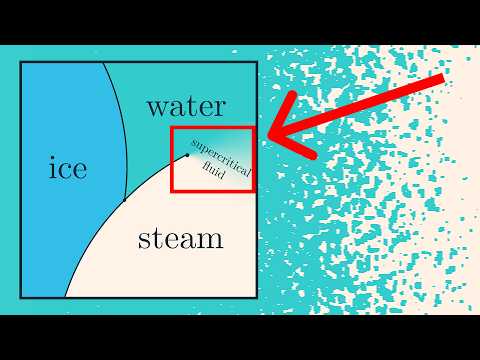
Simulating and understanding phase change | Guest video by Vilas Winstein

28 Aug 2025
41m
AI processed

This video, the first in a two-part series, explores phase transitions using a discretized fluid model called the liquid vapor model. It introduces the Boltzmann formula to explain the simulation's mechanics, detailing how temperature and chemical potential influence molecular behavior. The video elucidates phase trans...

Episode cover

The AI that solved IMO Geometry Problems | Guest video by @Aleph0

17 Aug 2025
14m
Episode cover

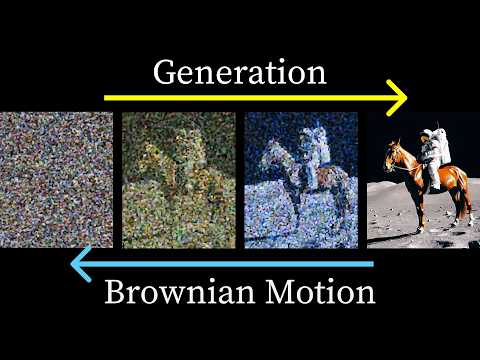
But how do AI images and videos actually work? | Guest video by @WelchLabsVideo

25 Jul 2025
37m
AI processed

The podcast explores how AI systems generate videos from text prompts, focusing on the connection between these models and physics, particularly Brownian motion and diffusion. It explains how diffusion models work by transforming pure noise into realistic images and videos through a step-by-step process, and it also di...

Episode cover

Summer of Math Exposition #4 | Teachers, I'd love to hear from you

05 May 2025
5m
Episode cover

Where my explanation of Grover’s algorithm failed

04 May 2025
16m
Episode cover

But what is quantum computing? (Grover's Algorithm)

30 Apr 2025
36m
AI processed

Grant Sanderson discusses quantum computing, specifically focusing on Grover's Algorithm for searching unsorted data. He begins by addressing common misconceptions about quantum computing, particularly the idea of parallel processing all possible solutions simultaneously. He uses a quiz to illustrate the difference in ...

Episode cover

There's more to those colliding blocks that compute pi

13 Mar 2025
27m
AI processed

This episode explores the surprising connection between colliding blocks, pi, and quantum computing. The speaker begins by revisiting a popular 2019 video demonstrating how the number of collisions between two blocks of differing masses, when one impacts a wall, reveals digits of pi when the mass ratio is a power of 1...

Episode cover

How to measure the universe | The Cosmic Distance Ladder Part 2

23 Feb 2025
25m
AI processed

This episode explores the ingenious methods used throughout history to measure cosmic distances, a journey from understanding the scale of our solar system to mapping galaxies across the observable universe. Against the backdrop of Kepler's work on planetary orbits, the discussion pivots to the clever use of parallax—m...

Page 1

Follow this podcast in Podwise

Sign in to get AI summaries, transcripts and mind maps for any episode, including new ones.

Open in Podwise