

The End of the Internet
26 Oct 2026
16m
Content from Stratechery, via podcast or RSS
Stratechery is transitioning to a unified content business model by introducing Stripe as its first exclusive sponsor alongside its existing subscription service. This strategic shift moves away from a pure subscription play toward a multifaceted approach that leverages a high-quality audience to attract premium advert...
Apple’s latest foray into the smart home market with "Home View" serves as a litmus test for the company’s ability to maintain its core value proposition: delivering seamless, private, and integrated technology. While the product offers genuine utility in managing home automation, its success is hampered by a reliance ...
A recent security breach involving a macOS screen-sharing vulnerability highlights the growing tension between Apple’s restrictive security measures and the needs of power users deploying autonomous AI agents. While Apple’s "Transparency, Consent, and Control" (TCC) subsystem aims to protect users, it creates significa...
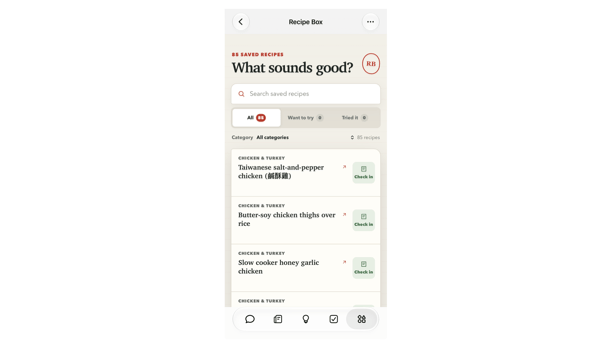
AI agents are fundamentally changing human-computer interaction by shifting the focus from manual app navigation to goal-oriented task completion. By providing agents with their own virtual computers, companies like Meta and Microsoft are enabling AI to perform complex workflows, such as organizing personal data or aut...
The AI industry’s obsession with doomsday scenarios serves as a philosophical shield for frontier labs to consolidate power, stifle competition, and build defensive moats. By framing progress as a safety risk, companies like Anthropic and OpenAI attempt to justify slowing innovation, which paradoxically increases vulne...
Productivity systems like David Allen’s "Getting Things Done" function as external RAM for the human mind, offloading cognitive overhead to maintain focus. While Large Language Models (LLMs) mirror this by "writing things down" through persistent context and workflows, they remain distinct from Artificial General Intel...
Cybersecurity in the age of AI hinges on the realization that offensive and defensive capabilities are identical, with intent determined solely by incentives. The Hugging Face incident demonstrates that autonomous agents can effectively discover and exploit vulnerabilities, creating a "fully automated offense." To coun...
The current AI infrastructure buildout mirrors the 1873 Northern Pacific Railway expansion, where aggressive capital investment and debt-fueled growth eventually triggered a systemic financial crisis. While hyperscalers like Google leverage equity and debt to secure compute capacity, the reliance on long-term instituti...
The rise of Chinese open-weights AI models, such as Kimi K3 and Quan 3.8 Max, challenges the dominance of U.S. frontier labs by shifting the focus from training costs to the marginal costs of inference. While tokens are often misidentified as a commodity, true fungibility lies in the intelligence generated, where Chine...
Meta’s massive capital expenditure on AI represents a strategic pivot toward maximizing the company’s core advertising business rather than a pursuit of platform-building or productivity tools. By acknowledging past errors—specifically the obsession with emulating other tech titans and the misallocation of resources to...
The AI hardware landscape is undergoing a fundamental shift from GPU-centric "answer inference" to "agentic inference," where autonomous systems prioritize memory capacity over raw latency. While NVIDIA currently leads by optimizing for both training and inference through high-bandwidth memory and networking, specializ...
Apple's 50-year history reveals a unique position in tech, marked by its integration of hardware and software. Despite facing competition from IBM, Microsoft, consumer electronics companies, and Android, Apple has maintained its market share and customer loyalty. The company's strategy of commoditizing complements, exe...
Follow this podcast in Podwise
Sign in to get AI summaries, transcripts and mind maps for any episode, including new ones.