


Strongman Annual Training Plan Walkthrough in Excel | CSCS Ch. 21
16 May 2022
9m

Hello Everyone! I am a professor of kinesiology, sport scientist, and former strength and conditioning coach. I am passionate about equipping my students to break into the strength and conditioning and fitness industries and helping others achieve their performance goals. I hold a PhD in Sport Performance and Physiology from East Tennessee State University (ETSU), an MA in Exercise and Sport Science from ETSU, and a BS in kinesiology from Westmont College. I am also a Certified Strength and Conditioning Specialist (CSCS) and Certified Performance and Sport Scientist (CPSS) through the NSCA. Finally, I have over a decade of experience as a coach, sport scientist, professor, and researcher working with youth, collegiate, and professional athletes; as well as general, special, and tactical populations. This channel is dedicated to giving you the tools to understand concepts in strength and conditioning and sport science, and to raise the level of coach education world-wide.

Alternative resistance training methods, including body weight exercises, core stability work, and non-traditional implements, require specific technical considerations to optimize athletic performance. While body weight training leverages individual anthropometrics and improves kinesthetic awareness, it lacks the exte...
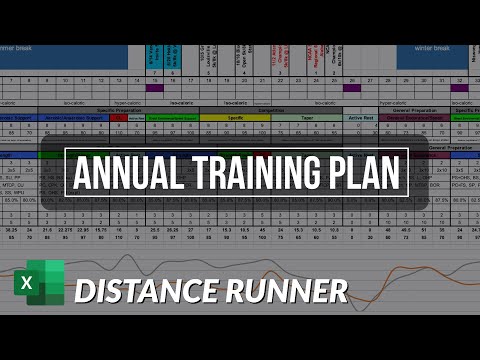
Annual training plans for collegiate athletes serve as comprehensive roadmaps that integrate competition schedules, physiological monitoring, and periodized training phases. Effective interpretation requires navigating the calendar from the starting date to the end of the season, identifying key performance peaks—such ...

Aerobic endurance programming requires a strategic integration of diverse training methods to optimize physiological adaptations and performance. Long, slow distance training builds foundational capacity and enhances lactate clearance, while tempo and threshold workouts improve the ability to sustain high-intensity eff...

Aerobic endurance programming centers on optimizing performance through specific physiological markers and structured training variables. While VO2 max provides a baseline for aerobic capacity, the lactate threshold serves as a more precise indicator of performance at elite levels, as it measures the ability to sustain...


Sprint and agility training requires a nuanced understanding of biomechanical phases and perceptual-cognitive demands. Linear sprinting involves distinct subtasks—start, acceleration, and top speed—each necessitating specific force vectors and body positioning. Agility extends beyond simple change-of-direction mechanic...

Speed and agility performance rely on the precise application of force, defined by impulse and the rate of force development (RFD). Athletes must optimize the force-time curve by increasing neural drive and leveraging the stretch-shortening cycle to enhance muscle stiffness and elastic energy recovery. While the spring...



Standardized fitness assessment protocols ensure reliable longitudinal data for athletic performance. Testing sequences prioritize non-fatiguing measurements like anthropometrics before progressing to agility, max strength, and power tests. Sprinting and local muscular endurance tasks follow, with aerobic capacity test...

Measuring athletic performance requires a multi-faceted approach that spans various fitness domains, including muscular strength, power, endurance, and agility. Low-speed strength, typically assessed via one-repetition maximums, provides a baseline, while high-speed power tests like vertical jumps capture explosive cap...


Follow this podcast in Podwise
Sign in to get AI summaries, transcripts and mind maps for any episode, including new ones.