

Ep 224 Vertigo Part 1: Approach to Episodic Vertigo
20 Oct 2026
1h 37m
Emergency Medicine Cases – Where the Experts Keep You in the Know. For show notes, quizzes, videos and more learning tools please visit emergencymedicinecases.com
Epistaxis management in the emergency department requires a systematic approach prioritizing airway safety and source control over immediate, aggressive intervention. Most nosebleeds are anterior and respond to sustained, direct pressure applied to the cartilaginous portion of the nose for at least 10 minutes, often su...
Emergency medicine clinical practice requires a synthesis of rigorous diagnostic reasoning, evidence-based management, and effective team communication. Diagnostic errors often stem from cognitive biases and incomplete data gathering, particularly in cases like subarachnoid hemorrhage where subtle symptoms are easily o...
Emergency medicine requires a nuanced approach to imaging, balancing the necessity of diagnostic clarity against the cumulative risks of radiation and resource limitations. CT scans, while essential, carry significant long-term cancer risks, particularly in younger patients, necessitating clear communication of these h...

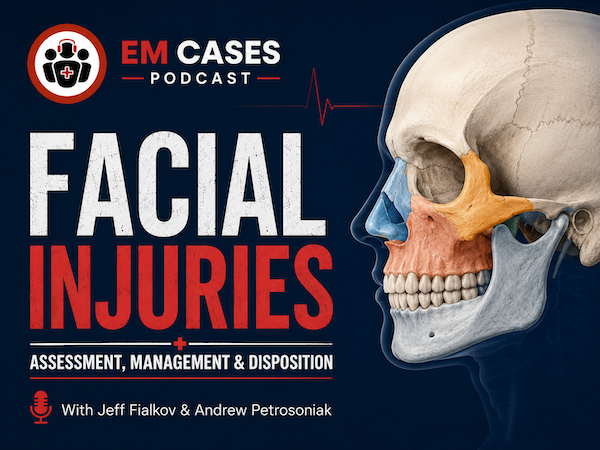
Facial trauma management in the emergency department requires a systematic, top-down approach that prioritizes airway stability and hemorrhage control over immediate imaging. While CT scans are standard for diagnosing complex fractures, physical examination remains the most critical tool for identifying life-threatenin...

Hip fractures and dislocations represent high-morbidity emergencies requiring rapid, systematic management in the emergency department. Mortality rates for hip fractures reach 20% within one year, necessitating surgical intervention within 24 hours to optimize outcomes. Effective emergency care centers on early pain ma...
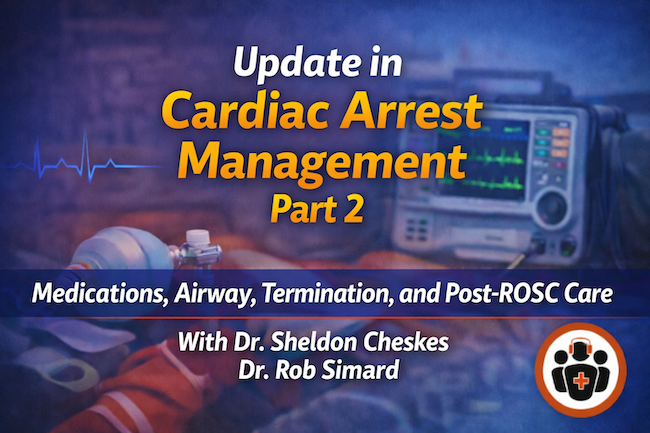
Cardiac arrest management requires moving beyond standard algorithms to address complex clinical scenarios through physiological judgment and evidence-based decision-making. Vasopressors like norepinephrine serve as the primary post-ROSC hemodynamic support, while push-dose epinephrine acts as a critical bridge. Antiar...
This podcast episode focuses on adult cardiac arrest management, emphasizing the importance of high-quality CPR, defibrillation strategies, and POCUS during arrest. It challenges the notion that guidelines alone are sufficient, advocating for a deeper understanding of care nuances. Key areas explored include emergency ...
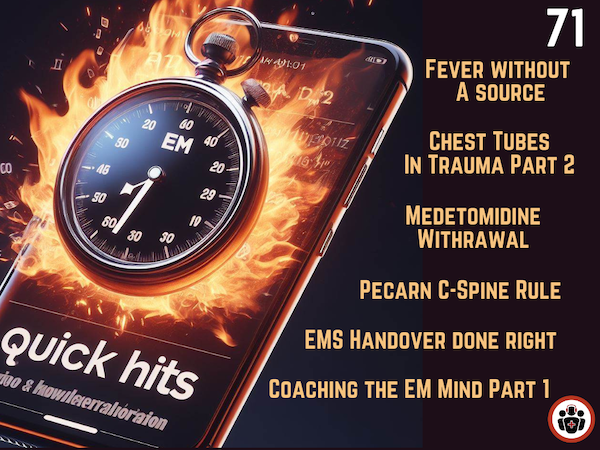
Emergency medicine clinical practice requires a nuanced approach to diagnostic uncertainty, procedural management, and professional sustainability. Fever of unknown origin necessitates a broad differential, including rare viral etiologies like West Nile virus, while traumatic pneumothorax management relies on patient s...

This podcast addresses the challenges of diagnosing and managing endometriosis in the emergency department, highlighting the frequent misdiagnoses and long wait times for specialized care. It emphasizes the importance of recognizing key historical features, such as progressive dysmenorrhea and cyclical bowel or bladder...
Status epilepticus management requires rapid intervention to prevent neuronal damage and improve patient outcomes. Essential actions include immediate glucose testing, prompt administration of benzodiazepines—preferably lorazepam—and minimizing the time to seizure cessation. When seizures persist beyond five minutes, s...

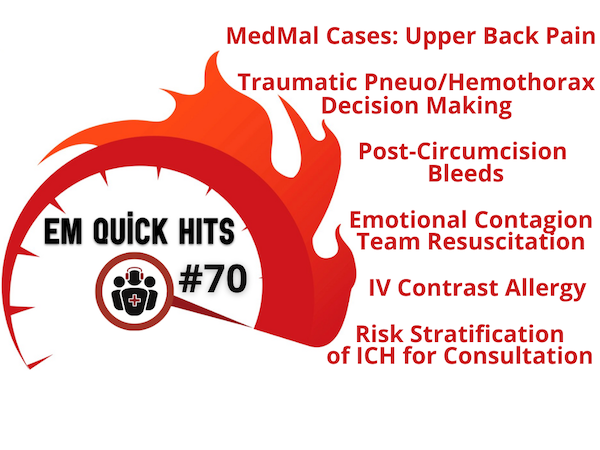
Upper back pain demands a rigorous differential diagnosis, as it frequently masks life-threatening conditions like aortic dissection or acute coronary syndrome rather than benign GERD or muscle spasms. In trauma management, hemodynamic stability dictates the approach to pneumothorax and hemothorax, where ultrasound pro...
Decompensated hypothyroidism presents a significant diagnostic challenge in the emergency department, frequently masquerading as sepsis or sedative overdose. Clinicians must maintain a high index of suspicion for patients presenting with unexplained bradycardia, hypotension, and altered mental status, particularly when...
Follow this podcast in Podwise
Sign in to get AI summaries, transcripts and mind maps for any episode, including new ones.