


Hard Tech Startups Are Built One Milestone at a Time
04 Sep 2026


Open-source AI models are rapidly transforming enterprise workflows, primarily driven by the need for cost-effective, customizable solutions. While frontier models remain essential for complex tasks, businesses are shifting a significant portion of their token consumption to open-source alternatives for coding agents a...


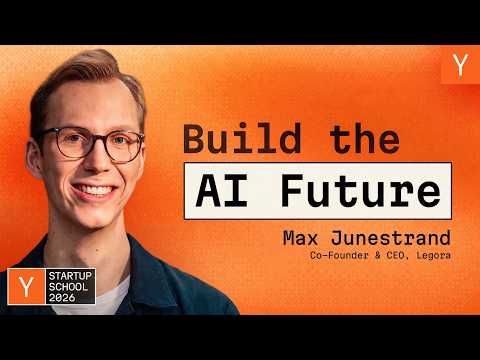
Legora, an agentic operating system for the legal industry, scaled from a three-person Swedish startup to a global enterprise with $100 million in annual recurring revenue in just 18 months. Founder Max Junestrand emphasizes that domain expertise is secondary to a relentless willingness to learn and iterate. The compan...


American leadership in artificial intelligence relies on a regulatory environment that balances safety with the need for a vibrant, open-source ecosystem. Michael Kratsios, Director of the White House Office of Science and Technology Policy, emphasizes that rigid, long-term regulatory thresholds often fail to keep pace...


Peter Steinberger recounts the rapid evolution of OpenClaw, an open-source coding agent project that gained massive traction within eight months. Born from his frustration with inefficient workflows, the project grew from a simple WhatsApp relay into a complex ecosystem with over 111,000 interactions. Steinberger empha...


Paper, an AI-native design tool, utilizes HTML and CSS as its core rendering engine to streamline the designer-developer handoff and enable seamless interaction with AI agents. By treating code as the source of truth, the platform allows designers to create, iterate, and ship high-quality software without the tradition...

Personal AGI represents a fundamental shift from consuming corporate-controlled AI to building proprietary, agentic infrastructure that compounds individual productivity. By leveraging personal context—the "library" of one's life—and "skill files" written in plain English, individuals can automate complex workflows and...



Human cognitive ability remains a critical differentiator in the age of artificial intelligence, as internal knowledge—or "cognitive L1 cache"—enables faster, more nuanced reasoning than external AI prompts. While AI tools can accelerate development, they do not replace the necessity of solving concrete, high-friction ...

AI development is shifting from simple model scaling to complex, agent-based systems that leverage context engineering and specialized hardware. Jeff Dean, a key figure in Google’s infrastructure, highlights that modern AI models now function at the level of junior engineers, capable of executing long-running tasks by ...

Follow this podcast in Podwise
Sign in to get AI summaries, transcripts and mind maps for any episode, including new ones.