

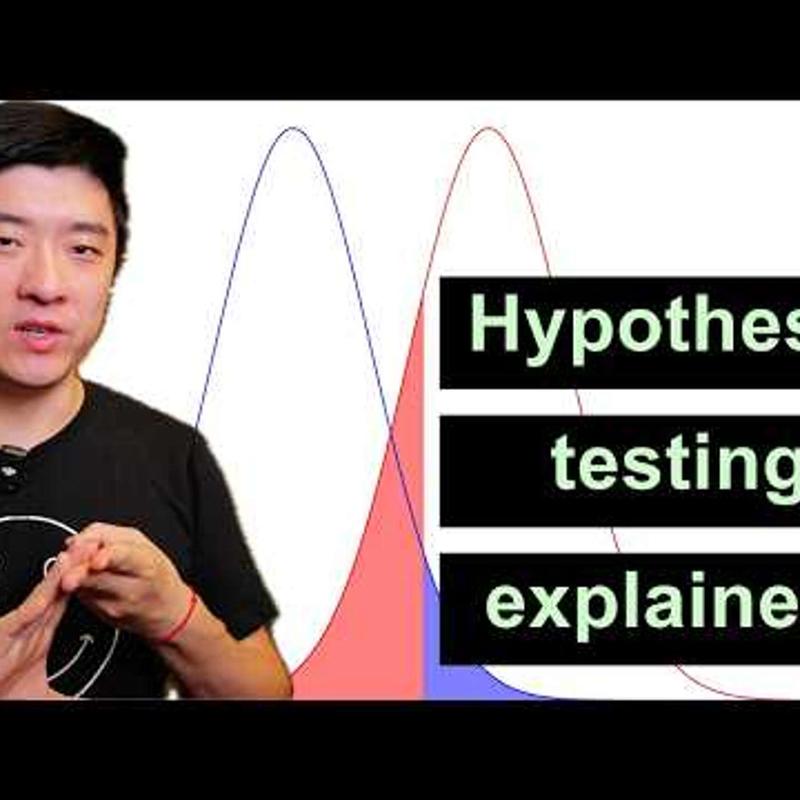

Hypothesis testing serves as a foundational yet frequently misunderstood pillar of data science, often obscured by inconsistent textbook definitions and overlapping statistical frameworks. Achieving a first-principles understanding requires distinguishing between standard deviation and standard error, while recognizing that the null hypothesis assumes no treatment effect. By setting a critical value—the threshold for rejecting the null—data scientists manage Type I errors, or Alpha. Introducing an alternative hypothesis enables the calculation of Type II errors, or Beta, where Power represents the probability of detecting a true effect. Crucially, increasing sample size narrows the distribution of sample means, thereby reducing the Minimum Detectable Effect (MDE) and enhancing the test's sensitivity. Mastering these relationships allows practitioners to move beyond rote memorization and effectively communicate experimental outcomes to stakeholders.
Sign in to continue reading, translating and more.
Open full episode in Podwise