

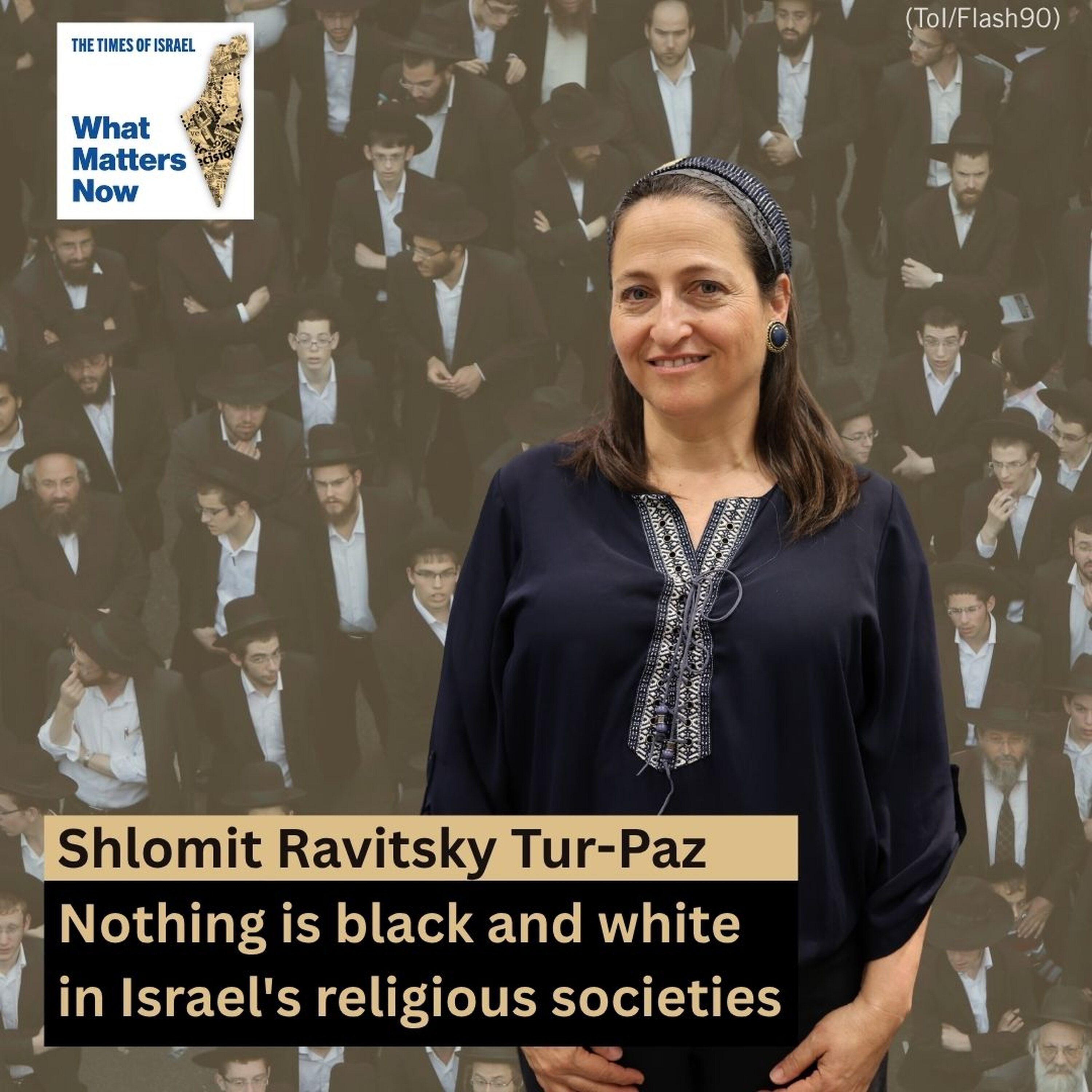
Shlomit Ravitsky Tur-Paz: Nothing is black and white in Israel's religious societies
A Mandatory Listen
The Israeli religious landscape consists of distinct communities—specifically the National Religious (Modern Orthodox) and Haredi (Ultra-Orthodox) sectors—each presenting unique challenges to the state’s democratic and economic sustainability. The National Religious community, while integrated into the workforce and military, currently lacks cohesive political representation, as existing parties often prioritize extremist settler ideologies over the broader community’s values. Conversely, the Haredi population, which is growing exponentially, maintains a lifestyle centered on Torah study, often relying on state funding and exemptions from military service. This demographic shift creates significant friction, as other sectors increasingly resent shouldering the economic and security burdens for a community that remains largely detached from the modern workforce and national service. Balancing these competing identities and obligations remains a critical, unresolved challenge for Israel's long-term stability.
Sign in to continue reading, translating and more.
Open full episode in Podwise