

#187 Orthostatic Hypotension Part 1: Gray Matters Segment

Core IM | Internal Medicine Podcast
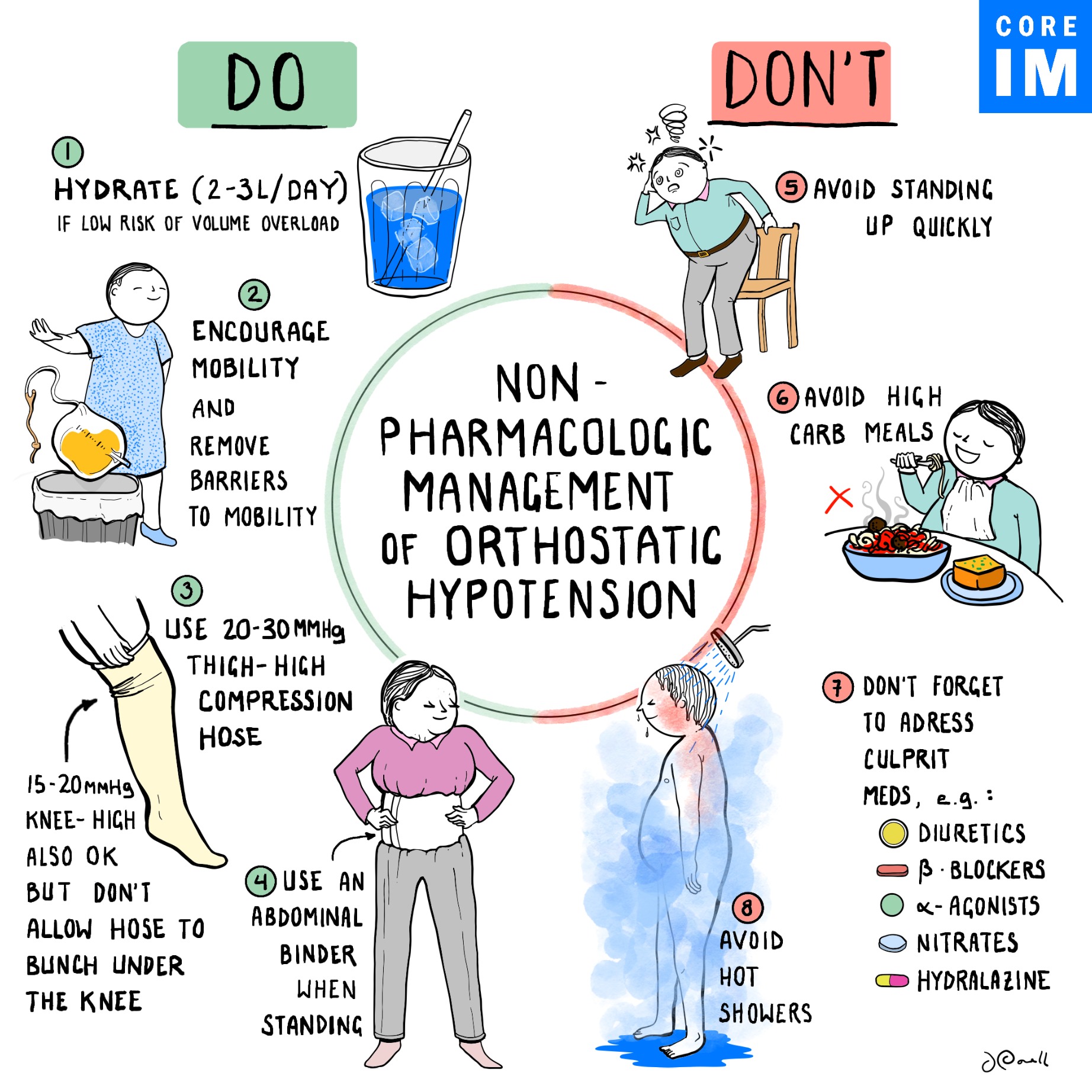
Orthostatic hypotension presents a significant clinical challenge in hospitalized patients, requiring precise diagnostic techniques and a focus on patient functionality rather than arbitrary blood pressure targets. Diagnosis involves measuring blood pressure and heart rate after at least five minutes of supine rest, followed by serial standing measurements at one, three, five, and ten minutes to capture delayed symptoms. Geriatrician Dr. Lou Lipsitz and autonomic expert Dr. Cyndia Shabao emphasize that treatment should prioritize symptom resolution and daily activity capacity. Non-pharmacological interventions, such as early mobilization, increased fluid intake, and the use of abdominal binders, often prove more effective than aggressive pharmacological management. Clinicians should also review medication lists to identify and hold high-risk agents like alpha-blockers, beta-blockers, and vasodilators. Physical therapist Sharon Gorman highlights the necessity of in-bed exercises to improve venous return and mitigate fall risks in vulnerable populations.
Sign in to continue reading, translating and more.
Open full episode in Podwise