

#188 Orthostatic Hypotension Part 2: Gray Matters Segment

Core IM | Internal Medicine Podcast
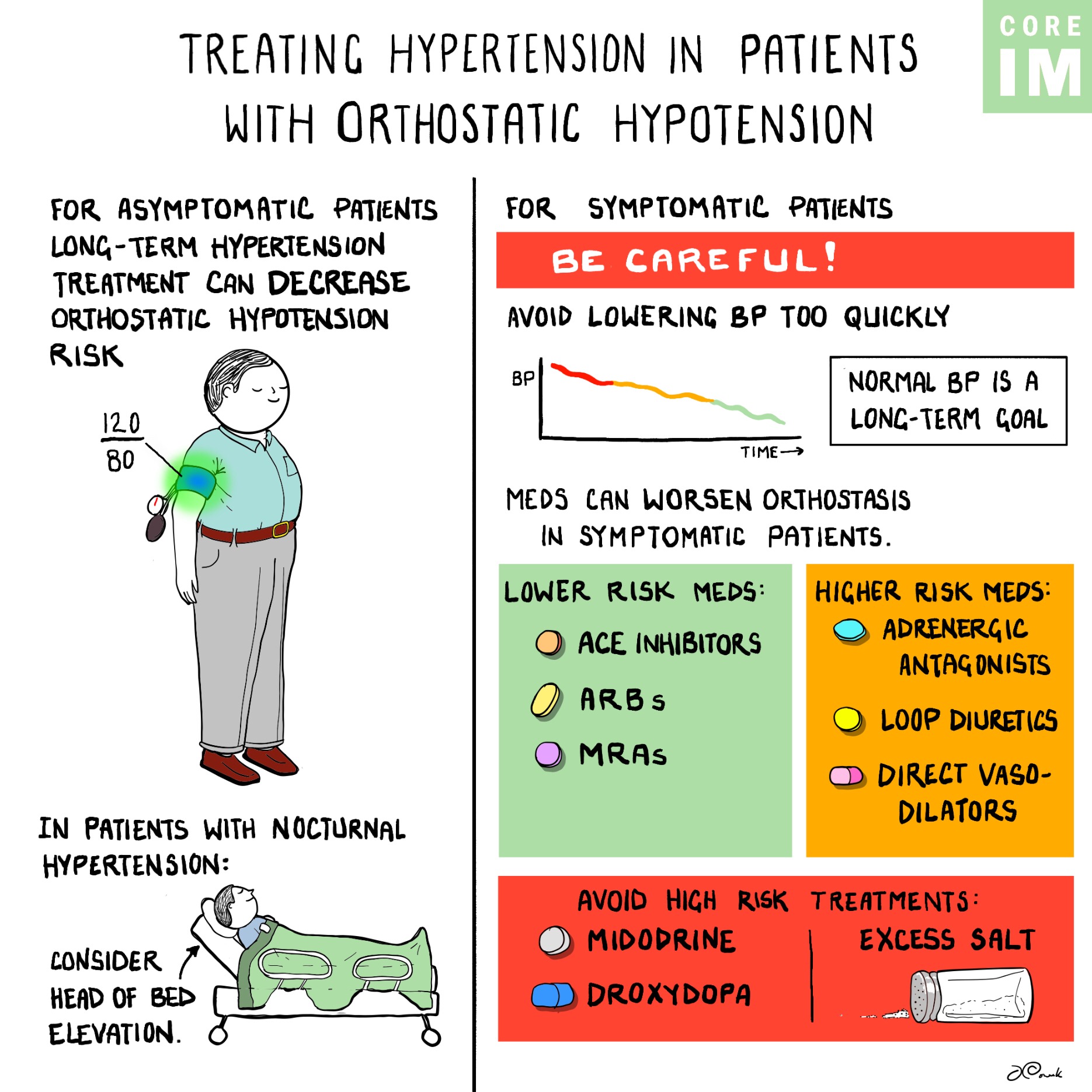
Orthostatic hypotension management in hospitalized patients requires balancing symptom relief with the risks of pharmacotherapy and immobility. Midodrine, the primary alpha-agonist, effectively raises blood pressure but carries a black box warning for supine hypertension, necessitating precise timing with patient activity. Alternative agents like fludrocortisone, droxidopa, and pyridostigmine offer options for refractory cases but demand careful monitoring for electrolyte imbalances and autonomic side effects. Chronic hypertension often exacerbates orthostatic instability, making cautious antihypertensive management vital for long-term stabilization. Furthermore, nocturnal hypertension can trigger pressure natriuresis, causing significant overnight fluid loss and morning dehydration. Ultimately, successful discharge planning hinges on multidisciplinary collaboration with physical therapy to prioritize functional mobility and fall prevention over the complete elimination of blood pressure fluctuations, ensuring patients remain active and avoid the deconditioning associated with prolonged bed rest.
Sign in to continue reading, translating and more.
Open full episode in Podwise