Podcast cover
ECGI · Education

Corporate Power and the Politics of Change

Over the past decade, corporations have moved beyond business to become influential political actors, shaping debates on climate, civil rights, ESG, and stakeholder governance. Corporate Power and the Politics of Change, an ECGI podcast series accompanying my Cambridge University Press book, features conversations with leading scholars exploring the growing role of corporations in politics, governance, and democratic life. I hope these conversations are as stimulating for you as they were for me. Happy listening! — Matteo Gatti

Episodes

Episode cover

Corporate Ordering: How Corporations Navigate Social Conflict with Stavros Gadinis

21 Oct 2026
45m
AI processed

Corporations increasingly function as primary sites for resolving socioeconomic conflicts, necessitating a shift from traditional shareholder primacy to a structured process of "corporate ordering." This framework applies public law principles—rulemaking, executive decision-making, and monitoring—to internal corporate ...
Episode cover

Dissecting the Architecture of Corporate Power with Elizabeth Pollman

13 Aug 2026
52m
AI processed

Corporate power increasingly shapes socioeconomic spaces, with corporations assuming roles traditionally held by governments. Elizabeth Pollman, a professor at the University of Pennsylvania Carey Law School, examines how legal doctrine and institutional systems—the "corporate governance machine"—reinforce shareholder ...

Episode cover

After the Retreat: Can Corporate Activism Return? with Tom Lin and Aneil Kovvali

13 Aug 2026
33m
AI processed

Corporate activism has undergone a dramatic shift, moving from a decade of social engagement to an abrupt retreat following the 2024 election. Corporations previously stepped into spaces of political paralysis to drive change, such as the federal recognition of Juneteenth and the banning of mandatory arbitration for se...

Episode cover

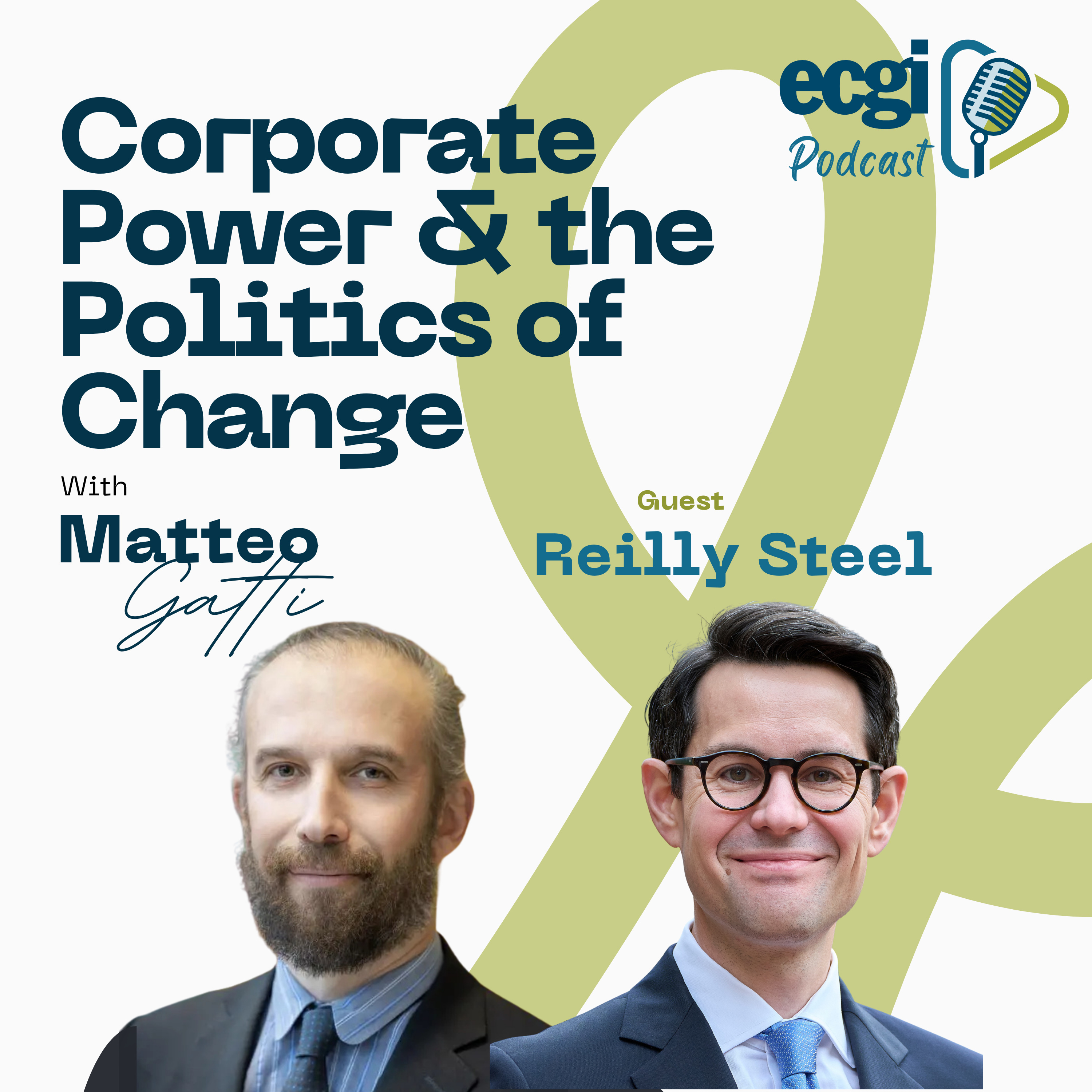
Politics in Corporations: Systematic Corruption with Reilly Steel

08 Jun 2026
45m
AI processed

Systematic corruption occurs when politicians manipulate economic privileges—such as subsidies, contracts, or regulatory forbearance—to manufacture political loyalty and entrench themselves in power. Unlike opportunistic corruption, which involves individual private gain, this systemic phenomenon creates a cycle of eco...

Episode cover

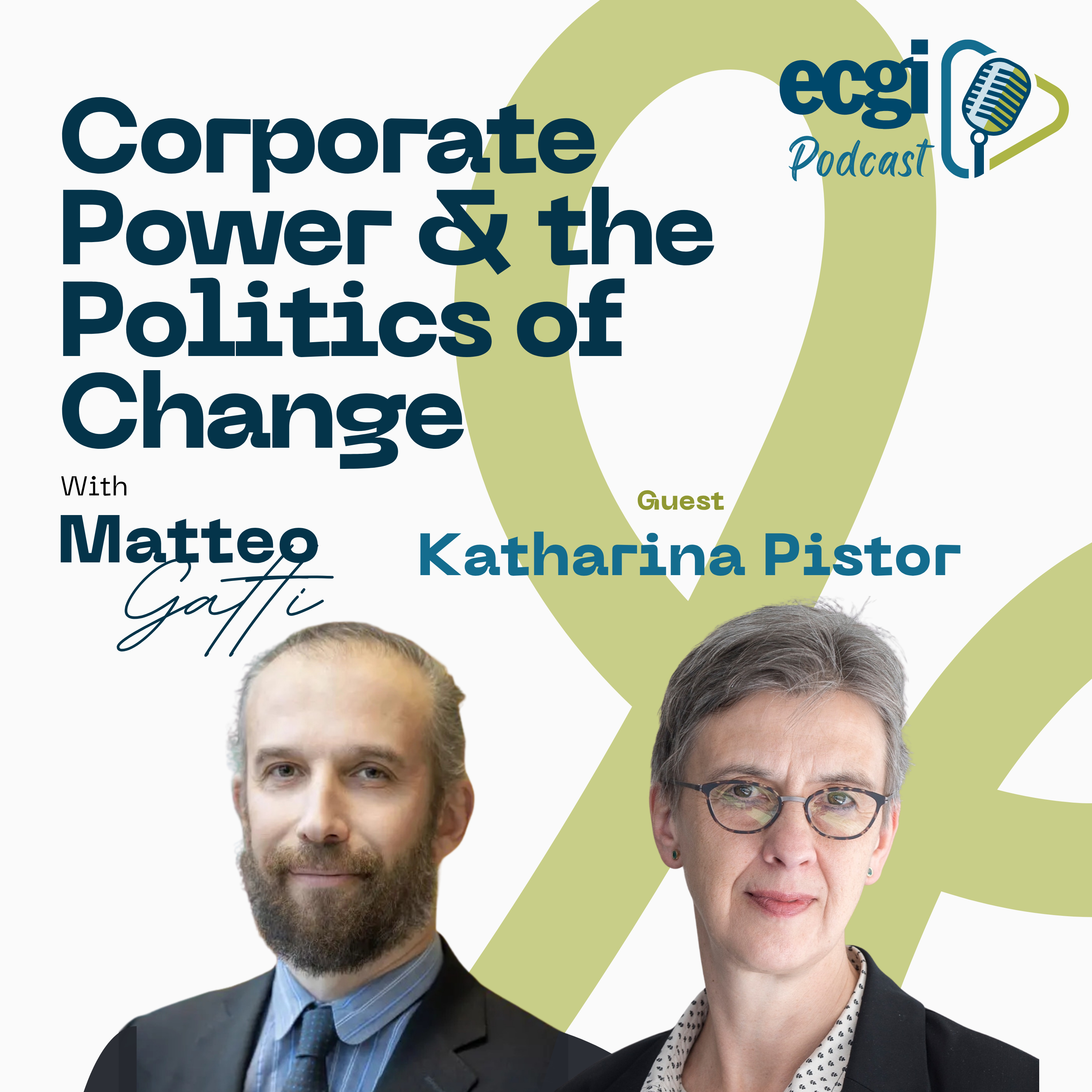
Reforming the Law of Capitalism with Katharina Pistor

08 Jun 2026
35m
AI processed

Capitalism functions as a legal regime rather than a purely economic system, relying on specific legal infrastructure to concentrate wealth and power. This architecture rests on three pillars: private legal empowerment, access to state-enforced coercion, and legal arbitrage, which allows actors to circumvent public reg...

Episode cover

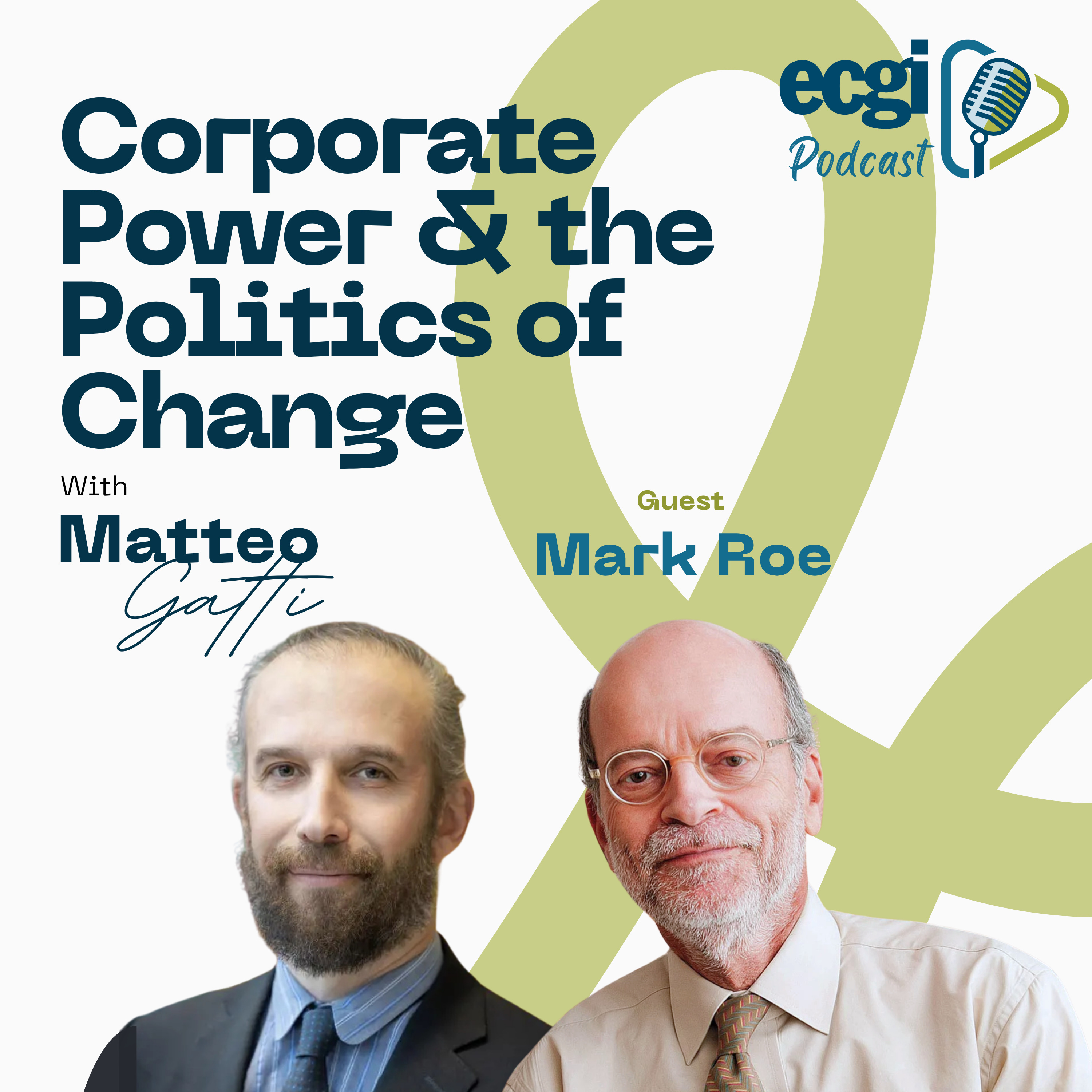
The Limits of Private Sector-led Reform with Mark Roe

08 Jun 2026
42m
AI processed

Shareholder-driven corporate social responsibility (CSR) failed because it relied on the flawed premise that private firms could effectively address systemic social and environmental issues in the face of political gridlock. Corporations remain vulnerable to the same political forces that paralyze government; when firm...

Episode cover

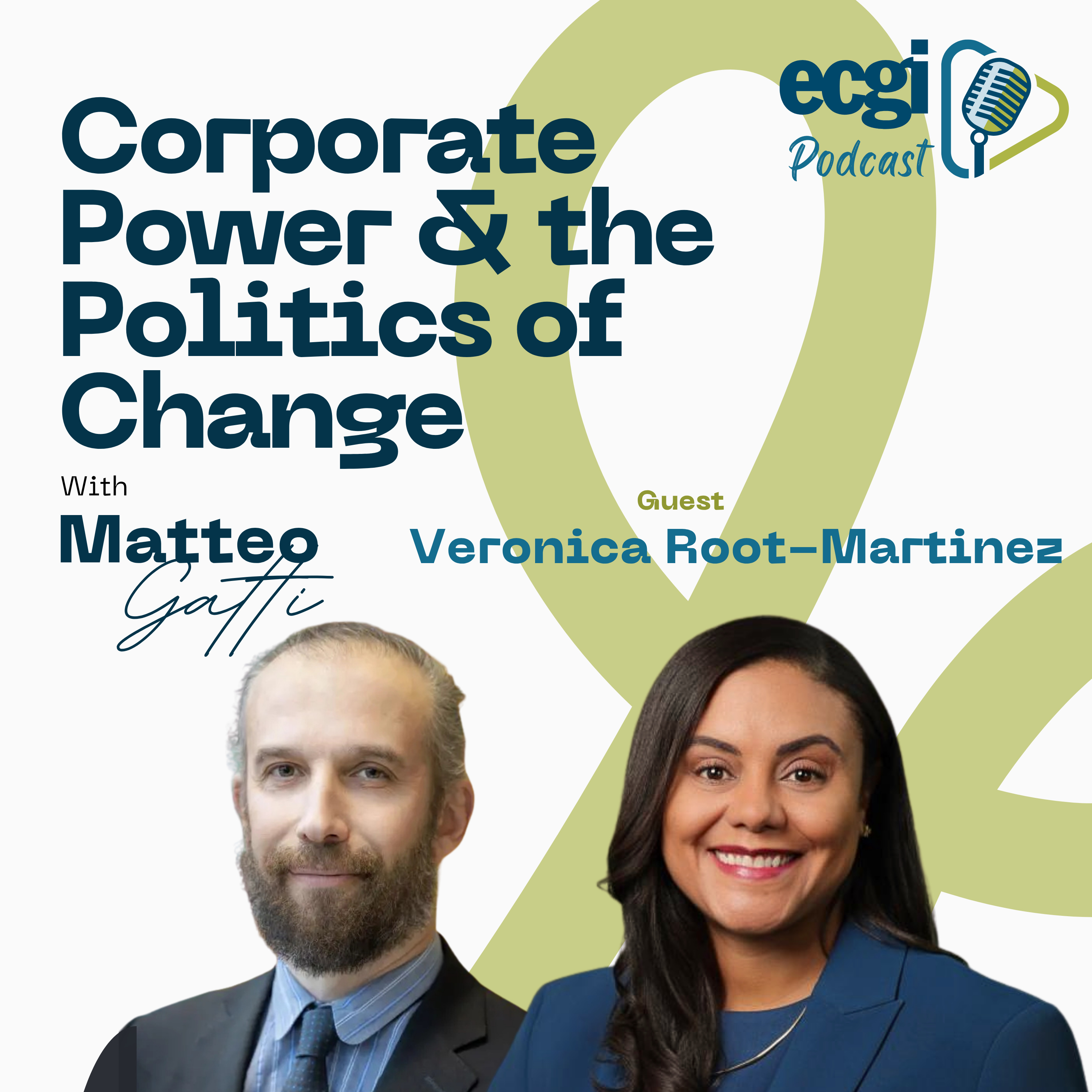
Dissecting the DEI Reversal with Veronica Root Martinez

08 Jun 2026
36m
AI processed

Corporate boards are miscalculating the risks associated with Diversity, Equity, and Inclusion (DEI) by treating it as a transient political issue rather than an enduring, strategic risk. Veronica Root Martinez, a law professor at Duke University, argues that firms should integrate DEI into their long-term risk managem...

Episode cover

The Law of Corporate Governing with Stephen Bainbridge and Roy Shapira Corporate Power and the Politics of Change with Matteo Gatti

26 May 2026
44m
AI processed

Corporate governing—the phenomenon of corporations taking positions on contested social and political issues—operates within the legal framework of director primacy and shareholder wealth maximization. While the business judgment rule generally shields boards from liability for decisions citing reputational benefits or...

Episode cover

The Economics of Corporate Governing with Swarnodeep Homroy and Elisabeth Kempf

26 May 2026
44m
AI processed

Corporate activism functions as a strategic response to a deeply polarized socioeconomic landscape, where CEOs navigate conflicting pressures from consumers, employees, and investors. Research indicates that while Democratic-leaning corporate speech can build brand loyalty among specific consumer segments, it frequentl...

Episode cover

Corporate Governing and Shareholder Voice with Jill Fisch and Tim Smith

26 May 2026
55m
AI processed

Corporations increasingly navigate contested political and social landscapes, a phenomenon termed "corporate governing" that often results in "political posturing"—empty public statements disconnected from operational reality. Shareholders utilize the proposal process to signal priorities and demand accountability, yet...

Episode cover

Corporate Governing and the Role of Shareholder Primacy with Ann Lipton

26 May 2026
48m
AI processed

Shareholder primacy functions as a legitimating mechanism for corporate power, masking the lack of democratic accountability among unelected corporate leaders by framing profit-seeking as inherently pro-social. This system relies on the assumption that external regulatory frameworks effectively constrain corporate beha...

Follow this podcast in Podwise

Sign in to get AI summaries, transcripts and mind maps for any episode, including new ones.

Open in Podwise