

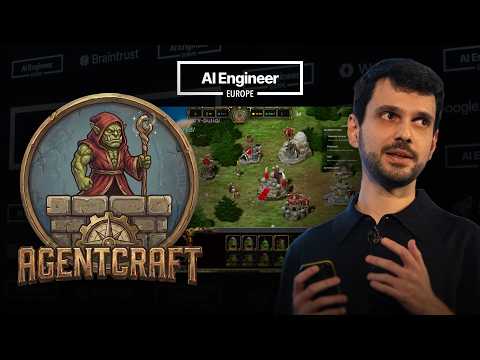
AgentCraft: Putting the Orc in Orchestration — Ido Salomon
25 Apr 2026
11m

We turn high signal in-person events for the top AI engineers, founders, leaders, and researchers in the world into the best free learning opportunities for millions around the world here on YouTube. Your subscribes, likes, comments, speaking, attendance, or sponsorships goes a long way toward making our biz model sustainable indefinitely. We strongly believe this industry deserves a better class of community and that we know how to do this well; we just need your support.

Software engineering fundamentals remain crucial when integrating AI into development workflows, as LLMs function best within specific constraints. Effective AI-assisted coding requires maintaining a "smart zone" by keeping tasks small and avoiding context overload, similar to the memory limitations of the character fr...


Software fundamentals remain essential in the AI era, as high-quality codebases are necessary to leverage AI's potential effectively. The "specs-to-code" approach often results in technical debt and "vibe coding," proving that code is far from cheap. To improve AI collaboration, developers should implement strategies l...

Personal productivity has evolved from simple checklists to complex, AI-driven "Life OS" systems capable of managing daily tasks autonomously. Despite the proliferation of tools like Benji and OpenInterpreter, current implementations often suffer from high friction, unreliable memory, and inadequate user interfaces tha...


"Token maxing"—the practice of artificially inflating AI token usage to meet internal performance metrics—has emerged as a controversial byproduct of corporate AI adoption. At large organizations like Meta and Salesforce, engineers are incentivized to maximize token counts to avoid negative performance evaluations, lea...


Building production-ready AI engineering systems requires a strategic balance between simple workflows and complex agentic architectures. Rather than defaulting to multi-agent systems, developers should prioritize the simplest solution—often a deterministic workflow—to maintain control and reduce context rot. A robust ...
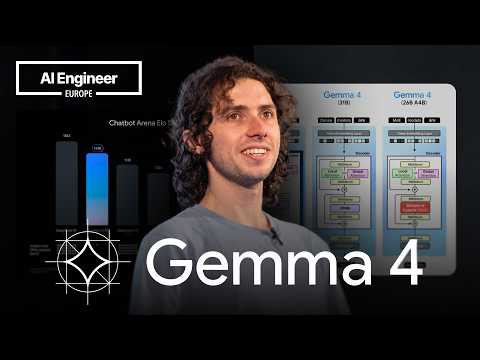

AI engineering serves as the legitimate successor to web development, fundamentally reshaping the software landscape as agents evolve from mere tools into both builders and users of technology. By making previously uneconomical software viable, agents are driving a surge in development, allowing companies to automate "...

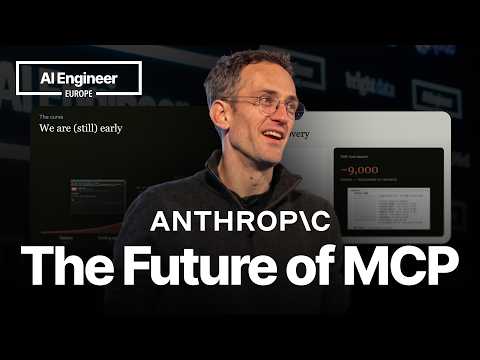


OpenClaw, the fastest-growing open-source AI project, faces significant operational and security challenges as it scales. With over 1,100 security advisories reported, the project highlights the inherent risks of agentic systems, particularly when they interact with untrusted content or lack proper sandboxing. Founder ...

Harness engineering shifts software development from manual implementation to orchestrating AI agents, treating code as an abundant, free resource. By offloading routine coding tasks to agents, engineers transition into roles focused on systems design, delegation, and establishing robust guardrails. Success in this par...
Follow this podcast in Podwise
Sign in to get AI summaries, transcripts and mind maps for any episode, including new ones.