

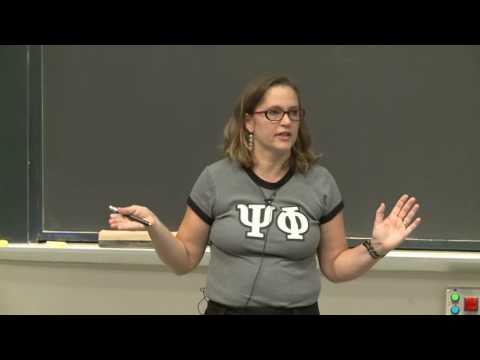
6. Hydrogen Atom Wavefunctions (Orbitals)
03 Aug 2017
1h 0m

A free and open online publication of educational material from thousands of MIT courses, covering the entire MIT curriculum, ranging from introductory to the most advanced graduate courses. On the OCW website, each course includes a syllabus, instructional material like notes and reading lists, and learning activities like assignments and solutions. Some courses also have videos, online textbooks, and faculty insights on teaching. Knowledge is your reward. There's no signup or enrollment, and no start or end dates. OCW is self-paced learning at its best. Whether you’re a student, a teacher, or simply a curious person that wants to learn, MIT OpenCourseWare (OCW) offers a wealth of insight, inspiration, videos, and a whole lot more! Get the full picture on the OCW website at https://ocw.mit.edu. Accessibility: https://accessibility.mit.edu/ User comments policy: https://ocw.mit.edu/comments/ (Channel banner photo by Nietnagel on Flickr: https://flic.kr/p/8WXxfK.)




Follow this podcast in Podwise
Sign in to get AI summaries, transcripts and mind maps for any episode, including new ones.