

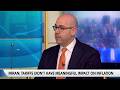

Former Federal Reserve official Stephen Miran examines the intersection of post-midterm politics and economic policy, dismissing the notion that tariffs significantly fueled U.S. inflation. He contends that tariff-related price increases were negligible compared to the 25% surge in the price level since the pandemic, noting that removing them would create a $400 billion revenue deficit. Miran critiques the Federal Reserve’s September interest rate hike, attributing core PCE elevation to temporary factors like energy costs and measurement errors rather than underlying economic overheating. He advocates for a reduction in forward guidance, arguing that while it may increase market risk premiums, it fosters greater transparency. Furthermore, he observes that current Fed leadership relies on traditional support roles rather than active communication, suggesting that the central bank should prioritize policy flexibility over rigid messaging to better align with its mandates.
Sign in to continue reading, translating and more.
Open full episode in Podwise