

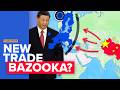

France and Germany have jointly proposed a new "second strike" trade weapon to protect the European Union against economic coercion and market-distorting practices, primarily targeting China’s industrial dominance. This shift marks a significant policy pivot for Germany, which has historically prioritized its export relationship with Beijing but now faces a widening trade deficit of 1 billion euros per day. The proposal aims to streamline the EU's ability to impose tariffs and restrict market access, circumventing the slow procedures of the existing Anti-Coercion Instrument through a "reverse qualified majority" voting system. By addressing China's control over critical inputs like rare earths and the surge of high-value exports like electric vehicles, the Franco-German alliance signals a move toward greater protectionism. This unified stance seeks to prevent Beijing from exploiting internal EU divisions and ensures the bloc can act decisively to secure its industrial future and supply chain independence.
Sign in to continue reading, translating and more.
Open full episode in Podwise