

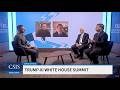
What Did Trump and Xi Agree to at the White House? | State of Play
Center for Strategic & International Studies
The recent U.S.-China summit represents a fragile ceasefire rather than a substantive détente, signaling a shift from overt confrontation toward a tenuous stability. Despite the ceremonial warmth, both nations maintained low expectations, resulting in limited concrete deliverables beyond a two-month extension of the economic truce and a preliminary agreement on an AI incident notification system. Taiwan remains a critical point of tension, as U.S. policy ambiguity risks undermining morale in the region, particularly amid pressure for significant arms sales. The absence of an official U.S. readout allowed China to dominate the immediate narrative, highlighting a lack of strategic coordination. While the meeting avoided further escalation, the relationship remains volatile, with unresolved issues regarding Iran, the South China Sea, and ongoing economic restrictions threatening to destabilize the current truce in the coming months.
Sign in to continue reading, translating and more.
Open full episode in Podwise