

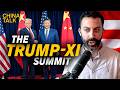
The upcoming U.S.-China summit serves primarily as a stage for political optics rather than substantive policy progress, reflecting a broader, unstable "K-shaped" relationship. While high-level engagement attempts to project stability, structural competition and adversarial actions continue to drive the downward trajectory of the rivalry. This period of extreme fluidity leaves both Washington and Beijing struggling to predict the future of the bilateral dynamic. Beyond immediate geopolitical concerns, the focus must shift from the "peak China" narrative to the potential for erratic behavior as Xi Jinping enters his later years, a phenomenon mirrored in historical transitions like the death of Mao. Ultimately, the current state of U.S.-China relations is defined by a lack of long-term strategy, with leaders increasingly prioritizing performative diplomacy over the hard, technical work required to manage a complex, globally integrated superpower rivalry.
Sign in to continue reading, translating and more.
Open full episode in Podwise