

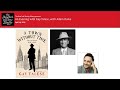

Gay Talese, a foundational figure in New Journalism, reflects on a career defined by immersive reporting and a commitment to chronicling the lives of ordinary people. Talese emphasizes the necessity of showing up, maintaining impeccable manners, and observing the overlooked details that reveal deeper societal truths. He recounts his early tenure at *The New York Times* and his unconventional methodology, which eschews tape recorders for handwritten notes on shirt boards to foster trust. Through anecdotes regarding the construction of the Verrazano Bridge, the tragic destruction of a Manhattan townhouse by Dr. Nicholas Bartha, and his persistent efforts to profile Frank Sinatra, Talese illustrates how patient, deep research transforms the lives of "nobodies" into enduring narratives. His work demonstrates that journalism thrives when reporters look beyond the surface, seeking out the human stories that standard news coverage frequently ignores.
Sign in to continue reading, translating and more.
Open full episode in Podwise