

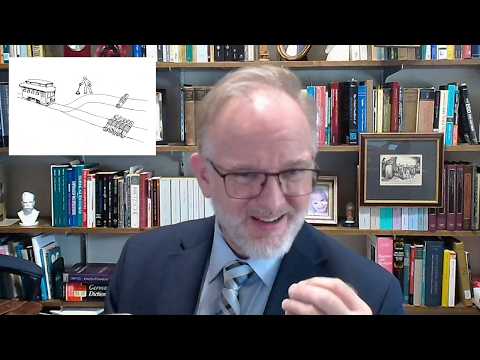

Trolley problems often fail to engage moral reasoning effectively because their abstract, artificial nature leads to absurdity rather than serious ethical deliberation. By shifting focus toward realistic, historically grounded dilemmas, moral philosophy can better explore the tension between deontological rule-following and utilitarian results-maximization. Traditional thought experiments frequently confound inaction with moral principle, whereas realistic scenarios—such as wartime interrogation or institutional policy decisions—provide more nuanced environments for testing cognitive processes. These grounded examples avoid the cartoonish quality of classic trolley variations, allowing for a more accurate assessment of how individuals navigate conflicting moral goods. Incorporating these diverse, fact-based dilemmas into ethical discourse helps overcome the bias inherent in standard models, ultimately fostering a more rigorous and applicable framework for analyzing moral cognition in both academic and practical settings.
Sign in to continue reading, translating and more.
Open full episode in Podwise