

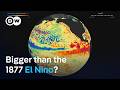

A "super El Nino" event is currently developing in the Pacific Ocean, with sea surface temperatures projected to reach 3 to 4 degrees Celsius above average. This natural phenomenon, the most extreme since 1877, is expected to supercharge global temperatures, making 2027 almost certainly the hottest year on record. Liz Bentley, Chief Executive of the Royal Meteorological Society, explains that while El Nino is a natural occurrence, it acts as an amplifier to the 1.5 degrees of warming already caused by human-induced climate change. The resulting weather extremes include severe droughts and wildfires in Australia, a weakened monsoon in India threatening global food security, and logistical disruptions in the Panama Canal due to low water levels. These shifts necessitate urgent action to phase out fossil fuels and a significant increase in global resilience to withstand the intensifying cycle of floods, heatwaves, and storms.
Sign in to continue reading, translating and more.
Open full episode in Podwise