

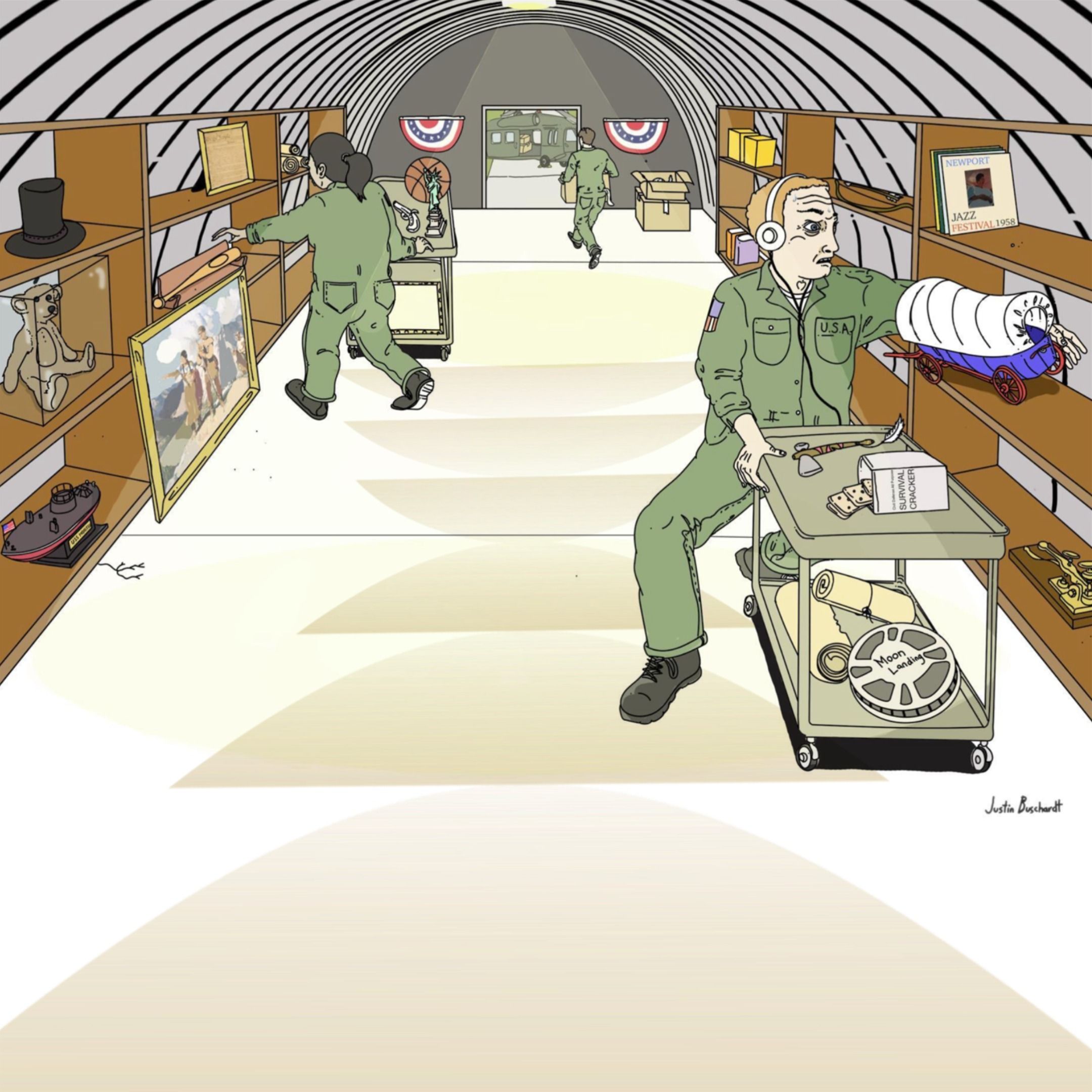

Cold War-era United States government officials developed elaborate, secret contingency plans to preserve the nation's identity in the event of a nuclear apocalypse. These plans prioritized the survival of the nation-state over individual citizens, tasking agencies with maintaining essential functions and safeguarding specific "totems" of American history, including the Constitution, the USS Monitor log, and Abraham Lincoln’s medical records. These artifacts were intended to serve as quasi-religious symbols to help survivors rebuild the American idea. However, contemporary perspectives challenge this focus on rigid, written history, contrasting it with the value of adaptive, oral traditions and questioning the morality of the nation-state itself. Ultimately, the Apollo moon missions frequently surface as a more resonant, unifying symbol of American collaborative prowess and transcendence, reflecting a collective yearning for a shared mission that transcends political polarization.
Sign in to continue reading, translating and more.
Open full episode in Podwise