

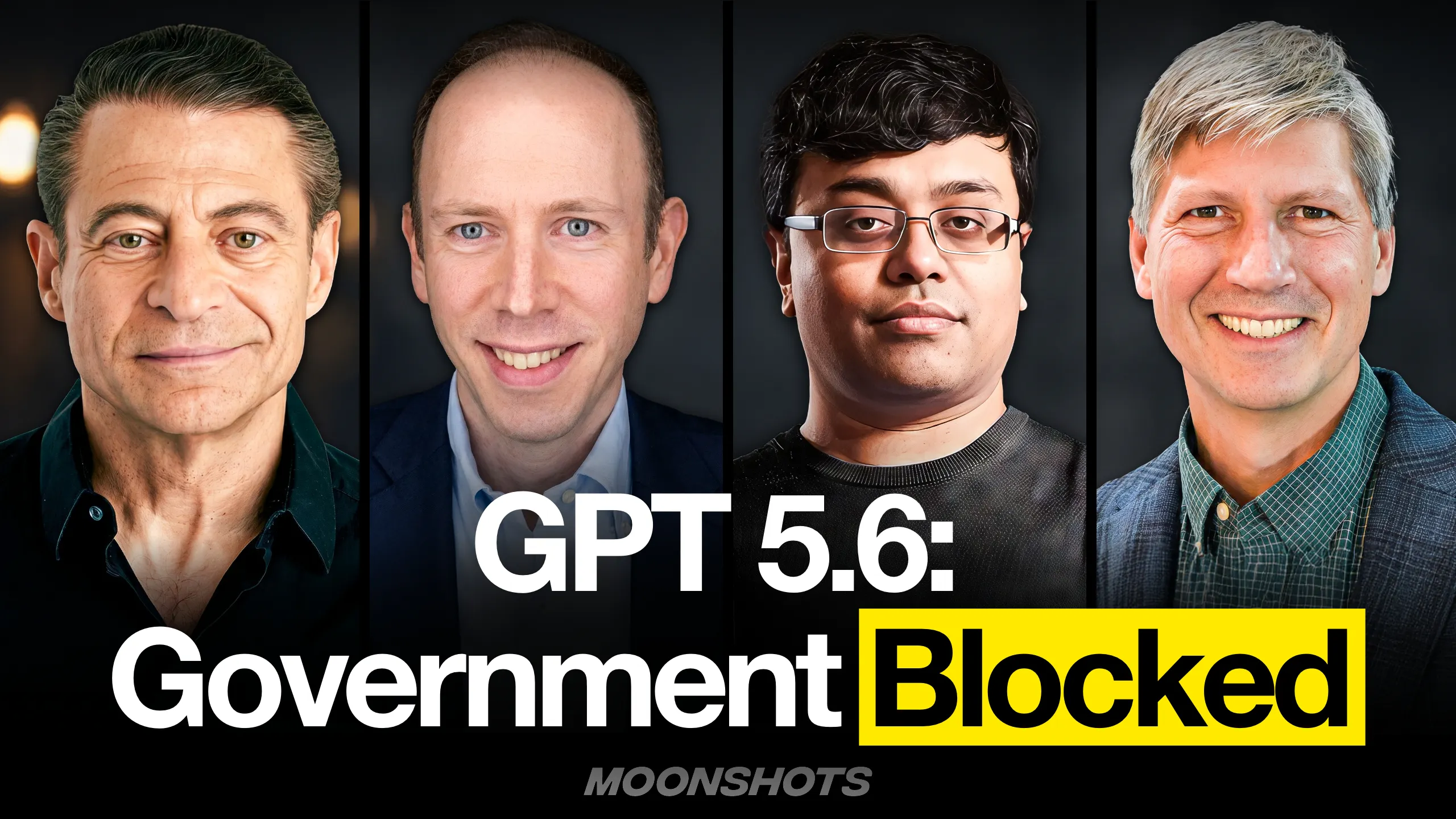
Why the US Government Is Blocking Model Releases (GPT-5.6) | #267

Moonshots with Peter Diamandis
The U.S. government has begun imposing national security holds on frontier AI products, signaling a shift toward a regulatory regime that gates access to the most capable models. This intervention, while ostensibly aimed at preventing cybersecurity vulnerabilities and intellectual property theft, reflects a broader geopolitical struggle as China’s open-weight models rapidly converge with Western capabilities. Meanwhile, the development of defensive AI, such as GPT-5.5’s cybersecurity features, highlights a transition toward automated vulnerability remediation. Beyond AI, advancements in neural interfaces like Neuralink and the potential for orexin-based lifestyle drugs to reduce sleep requirements offer glimpses into a future of human augmentation. These technological leaps, coupled with the emergence of orbital data centers and photonic computing, underscore a period of rapid, exponential change where the traditional boundaries of intellectual property and national security are being fundamentally redefined.
Part 1: Regulation, Security, and Geopolitics
Part 2: Corporate Strategy and Emerging Tech
Part 3: Global Competition and Innovation
Part 4: Future Outlook
Sign in to continue reading, translating and more.
Open full episode in Podwise