

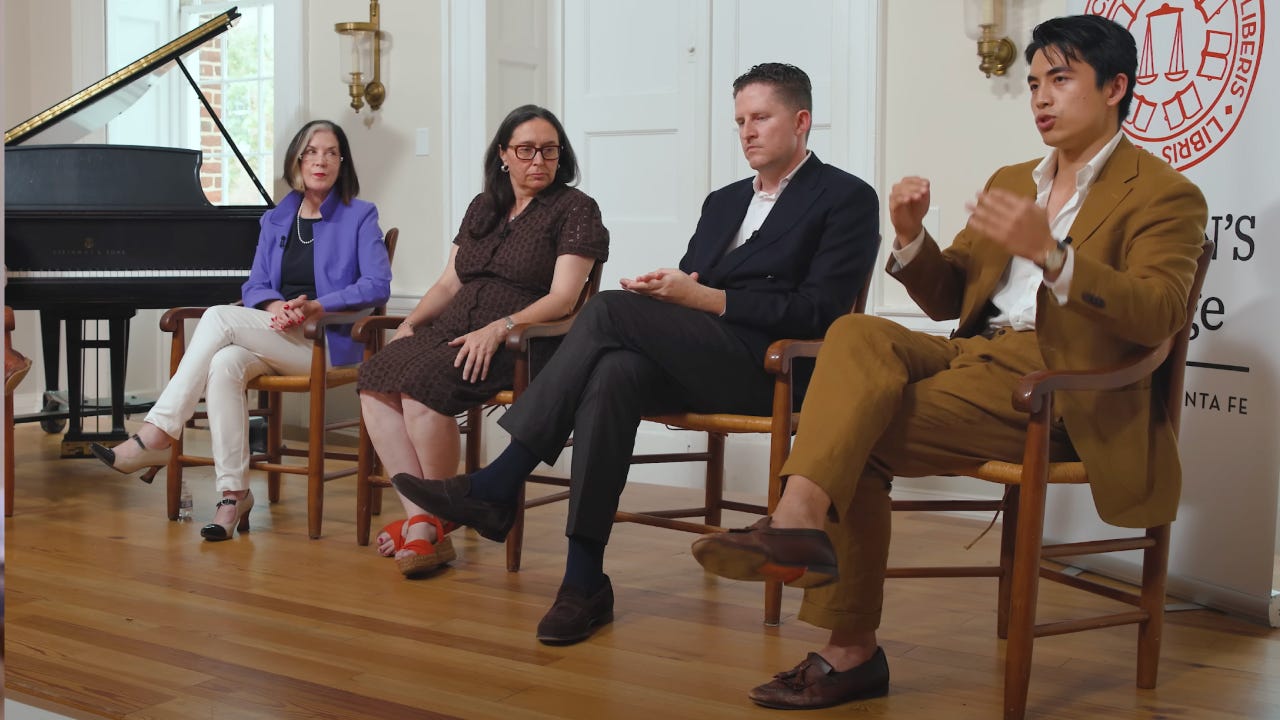

Artificial intelligence challenges the traditional boundaries of authorship, education, and philosophical inquiry. While AI can replicate the semantic structure of great literature and Socratic dialogue, it lacks the embodied human experience and "ensouled speech" that define profound intellectual contributions. This technological shift threatens to reduce education to mere workforce alignment, yet it simultaneously offers a path toward personalized learning models that prioritize individual self-development, or *Bildung*. By leveraging AI as a tool for curiosity rather than a substitute for human connection, educators can foster deeper engagement with complex texts. However, the risk of societal atomization and passive dependence remains significant. Ultimately, the future of human agency depends on whether AI is designed to expand intellectual community and critical thinking or to replace the human element of moral and existential reflection.
Sign in to continue reading, translating and more.
Open full episode in Podwise