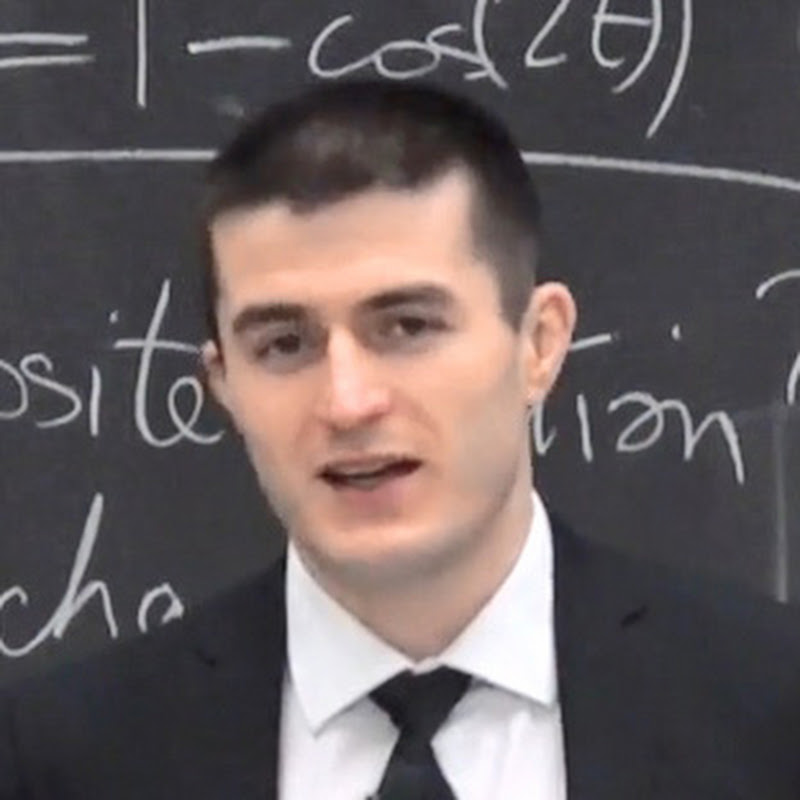
Joel David Hamkins, a mathematician and philosopher specializing in set theory and infinity, discusses the concept of different sizes of infinity and its transformative impact on mathematics. The conversation explores Cantor's work, Hilbert's Hotel, and Gödel's incompleteness theorems, distinguishing between provability and truth. Hamkins elucidates set theory's role as a foundation, the axiom of choice, and Russell's paradox, using analogies like committees and fruit salads to explain complex ideas. The discussion touches on the surreal number system, infinite chess, and the potential of AI in mathematical collaboration, reflecting on the nature of mathematical reality and the ongoing quest for understanding.
Outlines
Part 1: Cantor, Infinity, and Early Paradoxes
Part 2: Foundations and Axioms of Set Theory
Part 3: Logic, Truth, and Incompleteness
Part 4: Computation and the Halting Problem
Part 5: Mathematical Philosophy and Reality
Part 6: The Continuum Hypothesis and the Multiverse
Part 7: Alternative Systems and Complexity
Part 8: Mathematical Culture and Practice
Part 9: AI and Final Reflections
Sign in to continue reading, translating and more.