

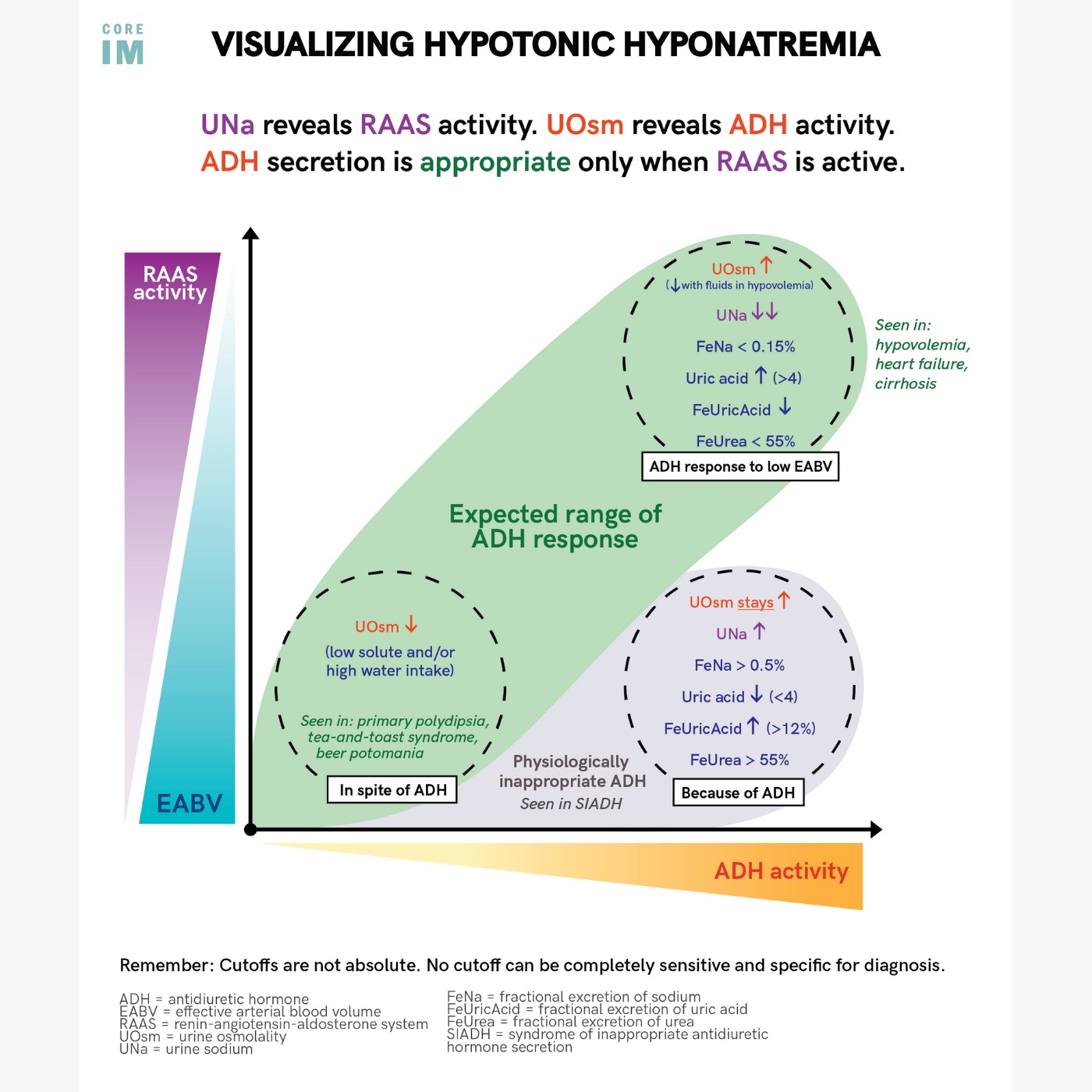

Hyponatremia diagnosis requires moving beyond rigid, traditional algorithms toward a physiological understanding of ADH activity and effective arterial blood volume. Serum osmolality serves as an initial quality check to confirm true hypotonic hyponatremia, while urine osmolality acts as a critical proxy for ADH activity, helping clinicians monitor treatment responses in real-time. Urine sodium, interpreted alongside fractional excretion of urea, reveals whether the body is sensing low effective blood volume or experiencing inappropriate ADH secretion. Serum uric acid provides further diagnostic clarity, as low levels often point toward SIADH rather than hypovolemic states. By integrating these four diagnostic markers, clinicians can better navigate the multifactorial nature of hyponatremia, avoiding the pitfalls of relying on misleading clinical histories or incomplete, static diagnostic models.
Sign in to continue reading, translating and more.
Open full episode in Podwise