

#109 Hyponatremia Management Part 1: 5 Pearls Segment

Core IM | Internal Medicine Podcast
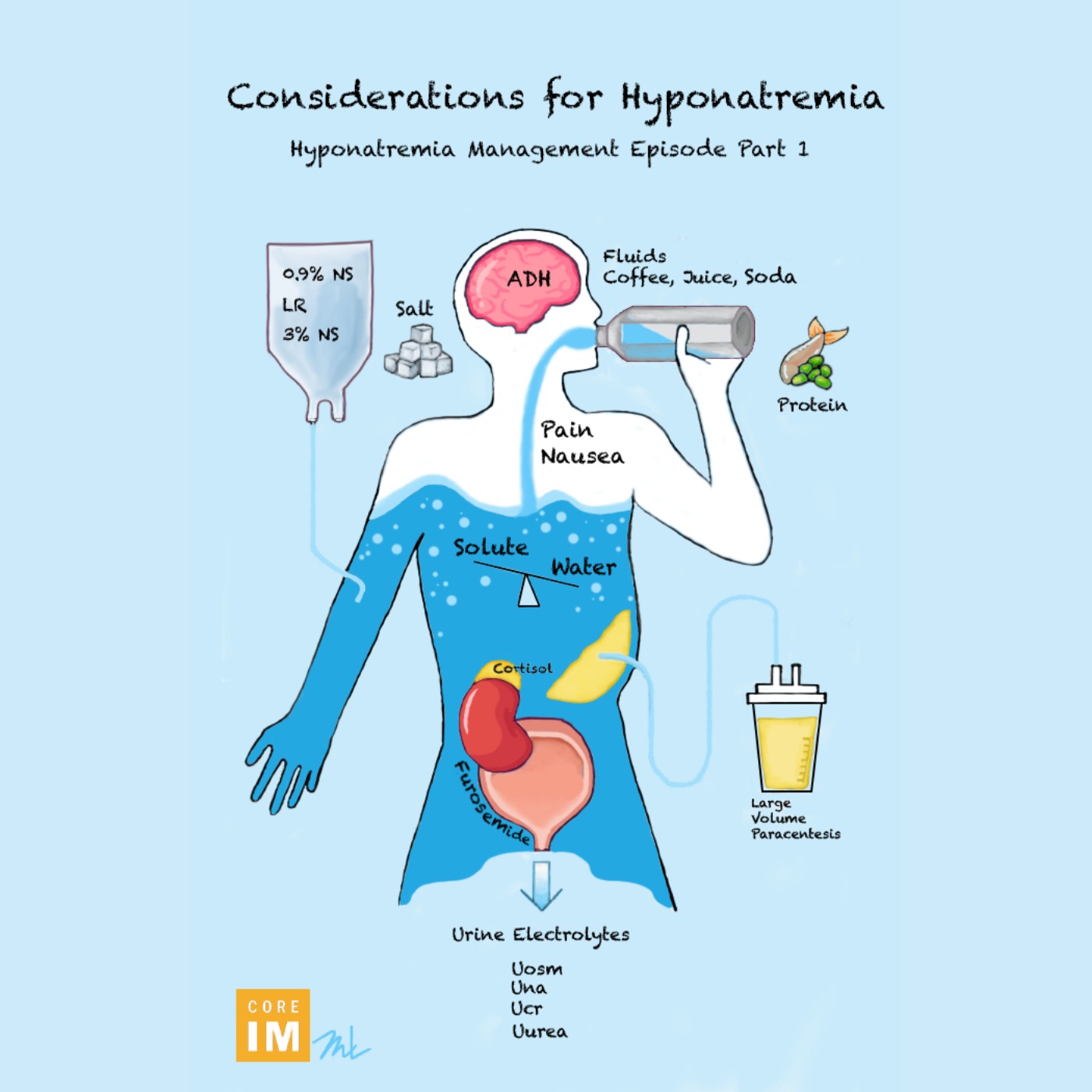
Hyponatremia management centers on correcting the relative imbalance between free water and solutes. Because the condition is dynamic, clinicians must evaluate total fluid intake—including seemingly innocuous sources like coffee or juice—against the patient’s ability to excrete water. In SIADH, administering fluids with higher osmolality than the urine promotes water excretion, while loop diuretics further assist by washing out the medullary gradient, effectively disabling the mechanism for water reabsorption. Solute administration, particularly through protein supplementation or urea, offers a more effective alternative to salt tablets, which often induce excessive thirst and volume expansion. Diagnostic workups for endocrine etiologies, such as hypothyroidism or adrenal insufficiency, should rely on high clinical suspicion rather than routine screening, as these conditions rarely present with isolated hyponatremia. Effective management requires precise tracking of intake and output to ensure that interventions align with the patient's specific physiological state.
Sign in to continue reading, translating and more.
Open full episode in Podwise