

DeFi Lecture 4: Introduction to Traditional Finance

Berkeley RDI Center on Decentralization & AI
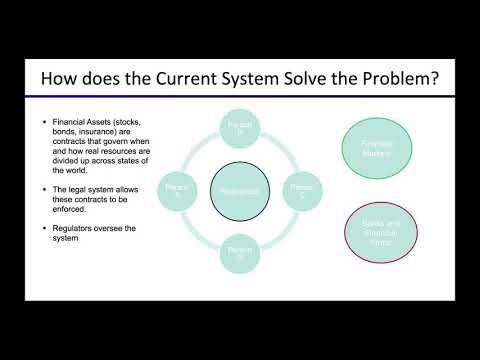
In this episode of Decentralized Finance, the speaker discusses traditional finance, its problem-solving approach, and related frictions relevant to DeFi applications. The discussion covers the finance problem, which involves wealth building across time and states, and enabling businesses to access capital for productive activities. The speaker defines states in finance, emphasizing their observability, verifiability, and contractibility, and distinguishes between states affecting everyone (macroeconomic events) and those affecting only a few. The concept of utility is explained as a way to rank outcomes, considering risk aversion. The current financial system, involving agents interacting through financial markets and banks, is examined, along with financial assets like stocks, bonds, and insurance. The role of regulators in ensuring system stability and preventing externalities like systemic risk and market breakdown is highlighted, noting the costs of regulation. The episode also evaluates financial systems based on resource allocation and willing participation, introducing mechanism design. Furthermore, the discussion covers basic financial instruments such as bonds, futures, stocks, options, and insurance, detailing their payoffs over time and states, and introduces the concept of value additivity. Finally, the episode explores the participants in financial markets, including retail investors and hedge funds, their trading behaviors, and the impact of leverage, as well as how people trade and access markets in traditional finance, including the payment systems.
Sign in to continue reading, translating and more.
Open full episode in Podwise