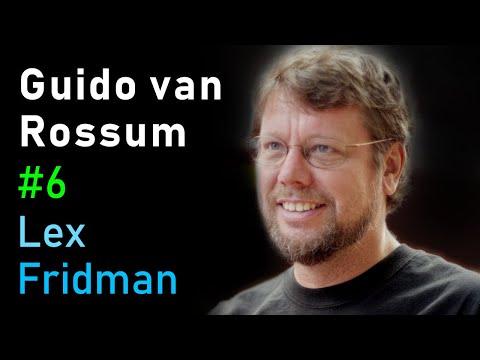
Guido van Rossum, the creator of Python, reflects on his views of human nature, the influence of literature, and the early days of personal computing. He recalls his initial disinterest in computers, his early programming experiments with Conway's Game of Life, and his surprise at the emergent complexity of simple systems. Van Rossum also shares his thoughts on consciousness, suggesting it's a spectrum tied to sensory input, particularly visual processing, and speculates that self-driving cars might develop something akin to consciousness. He further discusses the evolution of programming, the challenges of balancing productivity with code performance, and the design decisions behind Python, including the shift from Python 2 to Python 3.
Outlines
Part 1: Origins, Philosophy, and Human Nature
Part 2: Early Programming and Emergent Complexity
Part 3: Consciousness, AI, and Abstraction
Part 4: The Future of Software Engineering
Part 5: The Creation and Evolution of Python
Part 6: Leadership and Community Dynamics
Part 7: Technical Outlook and Legacy
Sign in to continue reading, translating and more.