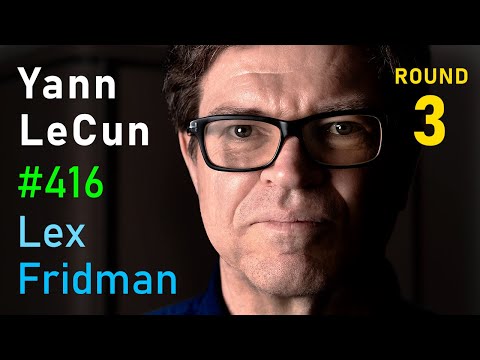
Yann LeCun, Meta's chief AI scientist, joins Lex Fridman to discuss the limitations of autoregressive large language models (LLMs) and proposes joint embedding predictive architectures (JEPA) as a more promising path toward advanced machine intelligence. LeCun argues that LLMs lack a true understanding of the physical world, persistent memory, and planning capabilities, unlike humans who learn through vast sensory input. He advocates for open-source AI development to ensure diversity and prevent control by a few entities, drawing parallels to the importance of a free and diverse press. LeCun expresses optimism about AI's potential to augment human intelligence, envisioning a future where AI assistants empower individuals, while acknowledging the need for guardrails to mitigate potential risks.
Outlines
Part 1: Open Source vs. Proprietary AI
Part 2: Limitations of Current LLMs
Part 3: JEPA and World Models
Part 4: Planning and Reasoning Architectures
Part 5: Addressing LLM Flaws
Part 6: Energy-Based Models and Optimization
Part 7: AI Ethics, Bias, and Open Source
Part 8: The Path to Human-Level AI
Part 9: Future Outlook and Advice
Sign in to continue reading, translating and more.