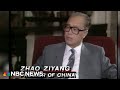
China’s path toward economic and political modernization in 1987 centers on the acceleration of reform under the leadership of Premier Zhao Ziyang. Zhao asserts that the 13th Party Congress will prioritize structural changes, viewing them as the only viable route for national development. While the government remains committed to a socialist system and absolute Communist Party control to maintain stability, it simultaneously seeks to integrate Western economic practices. International relations remain complex, with China denying official arms sales to Iran and citing the Taiwan Relations Act as a persistent obstacle to deeper U.S. cooperation. Furthermore, the dialogue highlights a shift in leadership transparency, as Zhao offers rare personal insights into his family life and background, signaling a departure from the traditional secrecy surrounding the Chinese political elite.
Sign in to continue reading, translating and more.
Continue