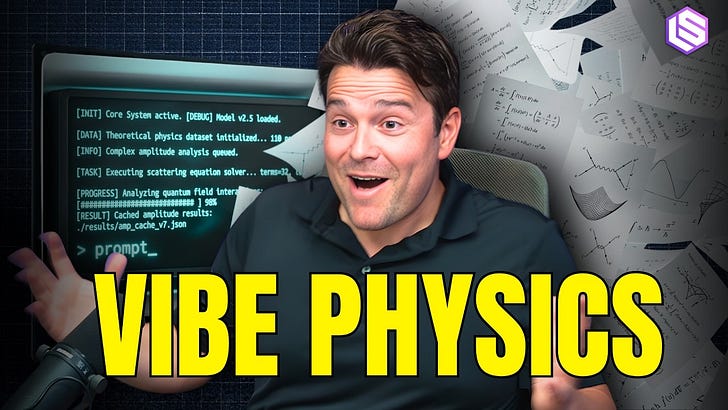

Theoretical physics is undergoing a paradigm shift as AI models demonstrate superhuman capabilities in resolving complex scientific problems. Alex Lupsasca, a professor at Vanderbilt and researcher at OpenAI, details how AI recently solved the "single minus gluon tree amplitude" problem—a challenge that had puzzled experts for over a year—by identifying a concise formula where human efforts yielded only unmanageable, factorial-growth expressions. Beyond mere computation, these models function as creative collaborators, allowing researchers to rapidly test hypotheses, navigate confusion, and explore multiple conceptual paths simultaneously. While human oversight remains essential for verifying results and formulating the right questions, the integration of AI into research workflows is accelerating discovery at an unprecedented rate. This evolution suggests a future where scientific knowledge is communicated through interactive, AI-augmented platforms rather than static, traditional academic papers.
Sign in to continue reading, translating and more.
Open full episode in Podwise