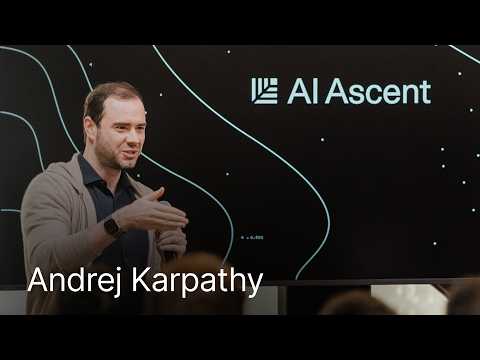
The transition to "Software 3.0" marks a fundamental shift where programming evolves into prompting and leveraging LLMs as autonomous agents. This paradigm, characterized by "vibe coding" and agentic engineering, enables rapid development but necessitates a rigorous focus on verifiability and quality control. While AI excels in structured domains like code and mathematics, it remains "jagged," often struggling with tasks outside its training distribution. Consequently, the role of the engineer is shifting from writing explicit rules to designing specifications, overseeing agentic workflows, and maintaining high-level taste and judgment. As intelligence becomes cheap and increasingly automatable, the most critical human skill is no longer rote coding, but deep understanding and the ability to direct these powerful, stochastic systems toward complex, meaningful outcomes.
Sign in to continue reading, translating and more.
Continue