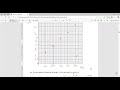
This episode provides a detailed walkthrough of a physics practical exam, focusing on experimental methodology and data analysis. The discussion covers techniques for measuring spring extension, including the use of set squares to minimize parallax errors and the construction of best-fit lines for non-proportional data. It examines the cooling rates of water in insulated versus non-insulated beakers, highlighting how initial temperature influences cooling speed. The session further details ray tracing procedures for light refraction through transparent blocks, emphasizing the importance of pin placement and thin line drawing for accuracy. Finally, it outlines the experimental design for investigating wire resistance, detailing the necessary apparatus, controlled variables, and the calculation of resistance using voltage and current readings. This guide serves as a practical resource for mastering laboratory techniques and analytical precision in physics examinations.
Sign in to continue reading, translating and more.
Continue