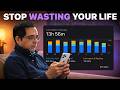
The average person's 70-hour weekly screen time induces "brain rot," a state of fragmented attention and diminished agency driven by rapid dopamine hits and over-reliance on AI. Hobbies function as cognitive rehabilitation, countering this decline by introducing the necessary struggle and surprise required for neural growth. Successful individuals, including Nobel Prize winners who are nine times more likely to have formal arts training than their peers, use hobbies to fuel their work rather than escape it. The VIBE framework—Vitality, Inquiry, Belonging, and Expression—categorizes activities that restore the human spirit. Finland’s consistent ranking as the world’s happiest nation stems from a culture built around these pillars, prioritizing real-world experiences over digital performance. Ultimately, protecting "play" from the pressure of social media metrics allows individuals to reclaim their humanity from a world that increasingly demands machine-like optimization.
Sign in to continue reading, translating and more.
Continue