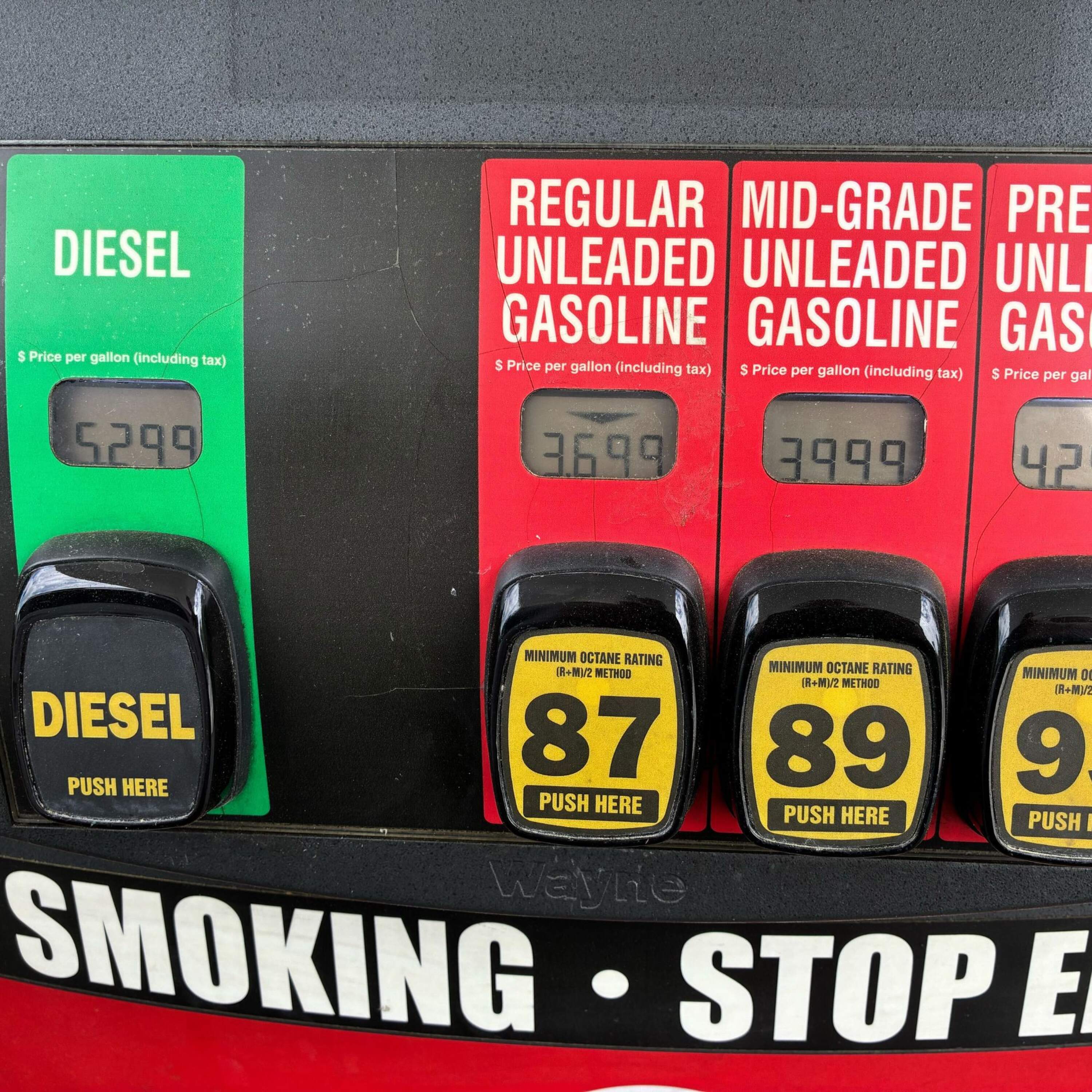
Rising U.S. gasoline prices, averaging $4.14 per gallon due to the ongoing U.S.-Iran conflict, are creating significant economic pressure and shifting consumer behavior. Stanford economist Neil Mahoney explains that fuel demand is "inelastic" because commuting remains a non-discretionary necessity for most households, forcing families to cut spending on dining out and travel to compensate for an estimated $850 annual increase in fuel costs. This "rockets and feathers" phenomenon—where prices spike quickly but retreat slowly—drives inflation expectations and influences Federal Reserve interest rate decisions. While the U.S. is a net oil exporter, the global "bathtub" nature of the oil market means domestic consumers remain vulnerable to international supply disruptions, such as the closure of the Strait of Hormuz. Consequently, drivers are increasingly considering transitions to fuel-efficient vehicles or public transit to mitigate the long-term impact on their household budgets.
Sign in to continue reading, translating and more.
Continue