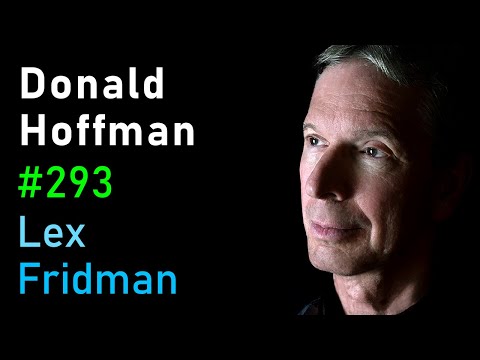
Donald Hoffman, a professor of cognitive science, challenges the conventional understanding of reality, asserting that our perceptions are not reflections of objective truth but rather adaptive interfaces shaped by evolution to maximize survival. Hoffman argues that evolution favors fitness over truth, suggesting that our senses hide the true complexity of reality, presenting a simplified, user-friendly interface. Drawing parallels to physics, he notes the emerging view that space-time is not fundamental but a construct. He proposes a "conscious realism," where consciousness, not matter, is fundamental, and space-time is a data structure created by interacting conscious agents. This perspective shifts the hard problem of consciousness from explaining how matter creates consciousness to how consciousness creates the physical world. He also touches on the implications of this view on love, death, and the meaning of life.
Sign in to continue reading, translating and more.
Continue